
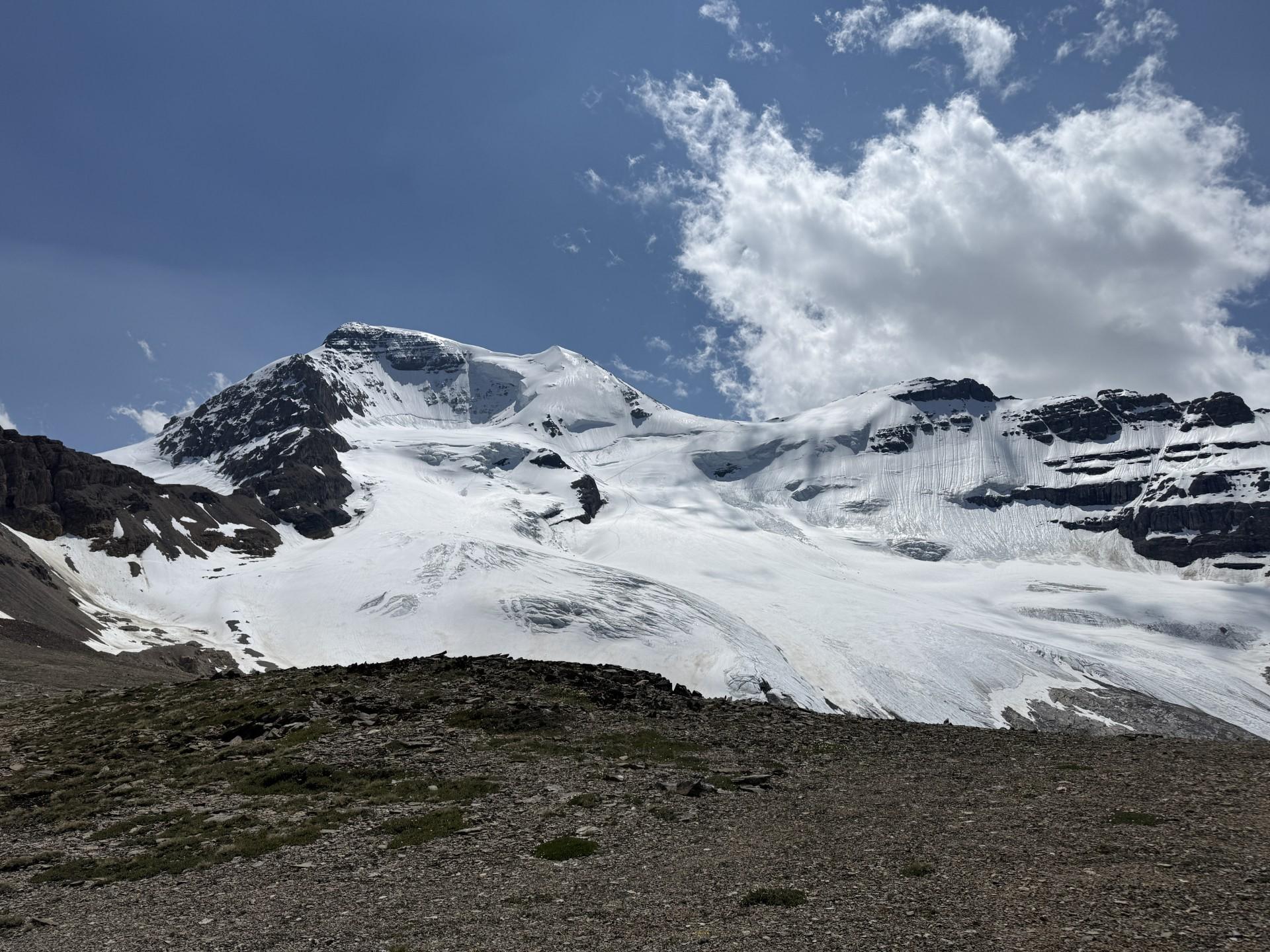
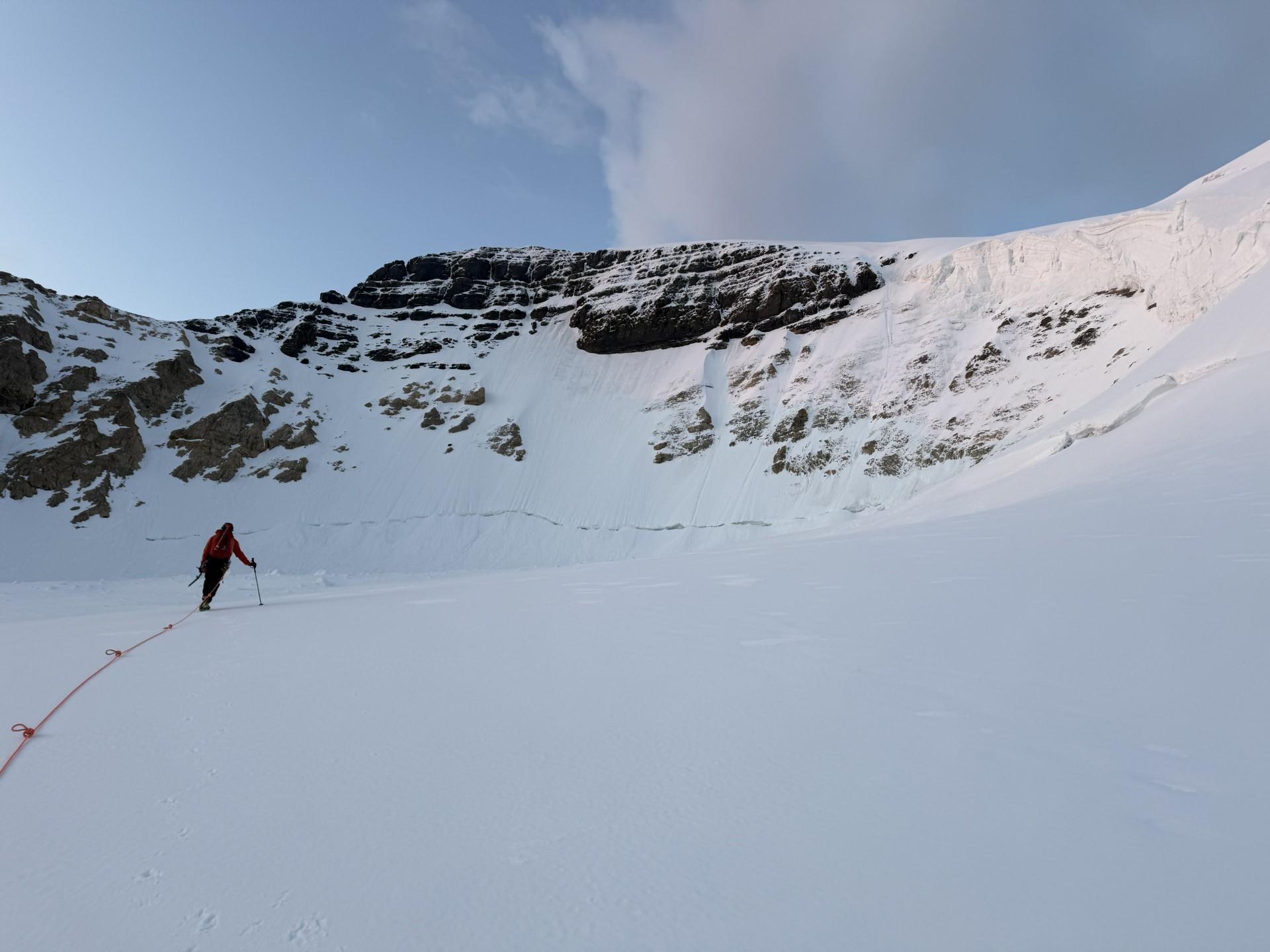
On July 13, Parks Canada Visitor Safety staff climbed the North Face of Mount Athabasca to assess current conditions.
Glacier travel was excellent during the morning hours, with firm travel conditions and straightforward movement. By noon, however, areas at approximately 3,100 m and below had softened significantly, with foot penetration reaching up to 50 cm anywhere off the established track.
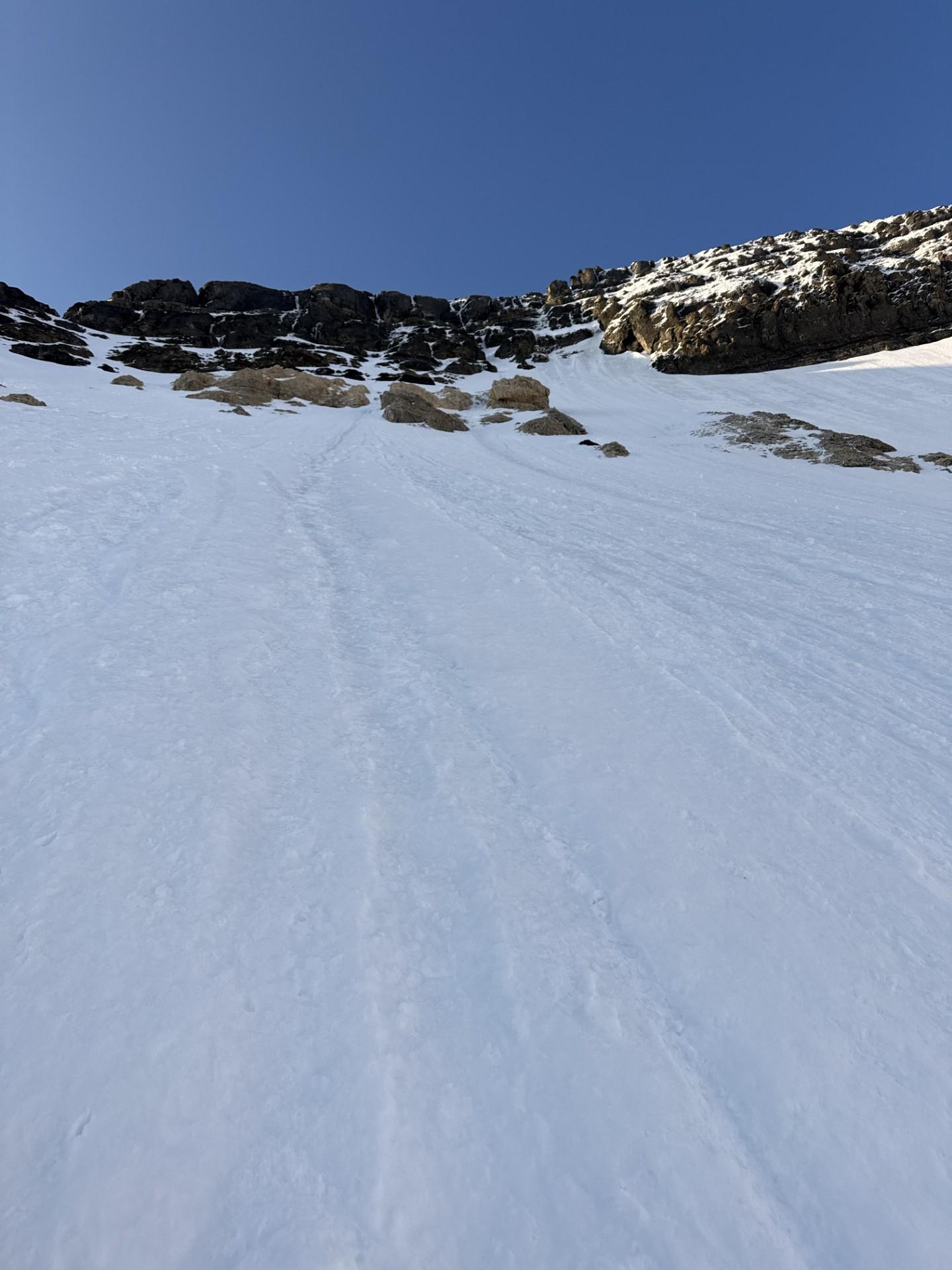
The crux pitch is currently in good condition, with some mediocre ice present. Short ice screws are recommended for available ice placements, a small selection of cams is recommended and pitons may be useful.
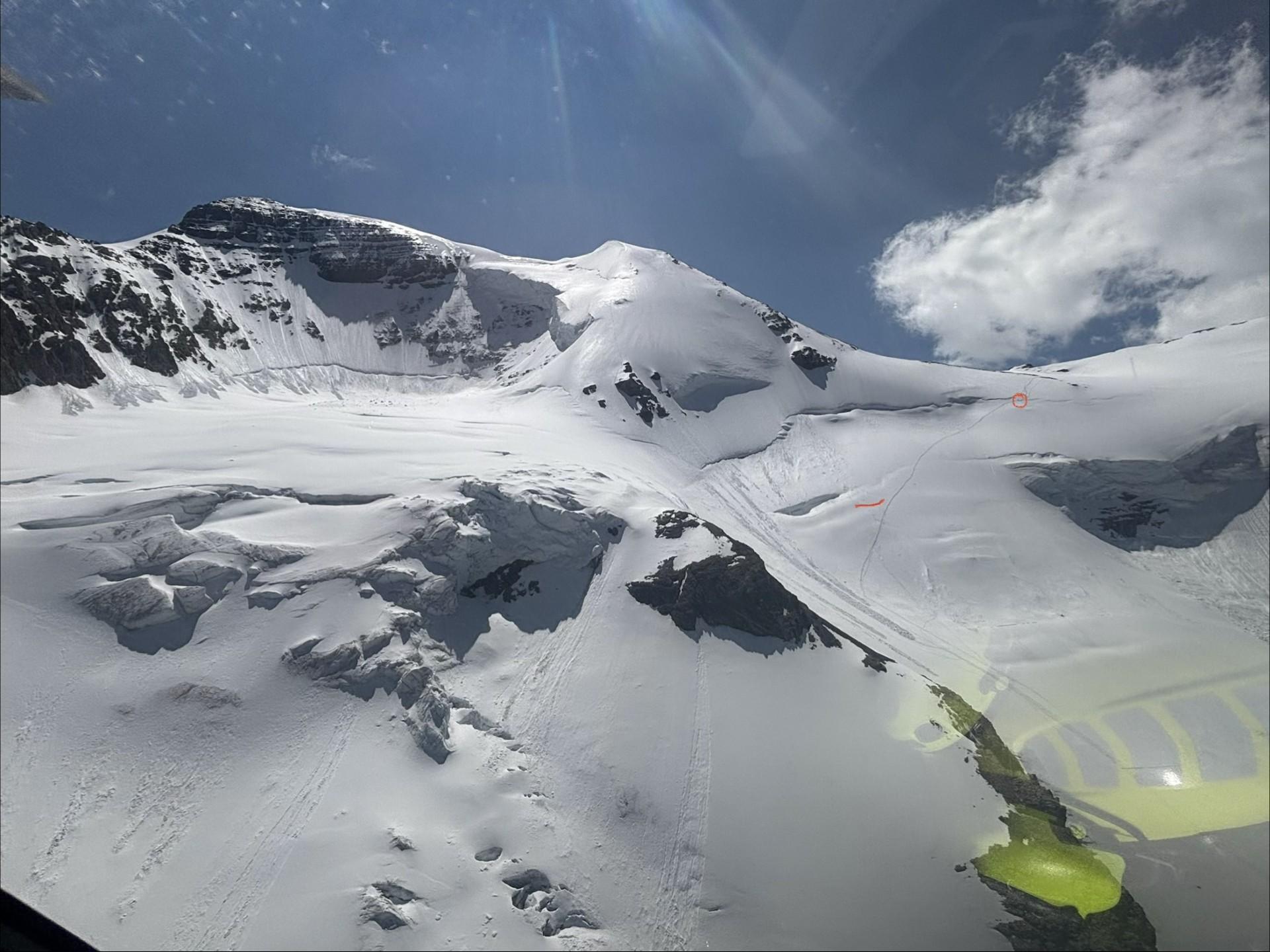
The team descended via the North Ramp route and observed numerous areas of sagging along the established trail. Of particular note, a significant crevasse is opening below Silverhorn. Sagging snow bridges and visible cracks extend close to the current track. The bergschrund near the top of the route (circled in the accompanying photo) has also evolved considerably. The original track appears to have collapsed in one location, leaving a noticeable hole where the trail previously crossed.
Later that afternoon, Parks Canada Visitor Safety and Arrow Helicopters responded to a stranded party near the top of the Silverhorn route. During their climb, a member of the party lost equipment into a crevasse, which left the group unable to continue upward and without the skills or equipment required to descend safely. All members of the party were assisted without further incident.
This incident serves as a valuable reminder that mountain conditions, weather, and unexpected events can quickly alter a day's objectives. Climbers should be prepared not only for their intended route but also for the possibility of retreat. Carrying the equipment necessary to safely ascend and descend the route, maintaining the ability to adapt plans when circumstances change, and having the technical skills required to navigate and travel safely in glaciated terrain are fundamental parts of responsible mountain travel.
On The Map
These observations and opinions are those of the person who submitted them. The ACMG and its members take no responsibility for errors, omissions, or lapses in continuity. Conditions differ greatly over time and space due to the variable nature of mountain weather and terrain. Application of this information provides no guarantee of increased safety. Do not use the Mountain Conditions Report as the sole factor in planning trips or making decisions in the field.