Avalanche Forecast
South Rockies

Lots of uncertainty in the snowfall forecast for Tuesday and Wednesday. If it's dumping snow, consider the avalanche danger high.
Avalanche Problem 1: Persistent Slabs
What Elevation?

Which Slopes?

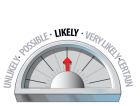
Chances of Avalanches?
Expected Size?

Travel and Terrain Advice
- Avoid avalanche terrain around treeline.
- Avoid exposure to terrain traps where the consequences of a small avalanche could be serious.
Avalanche Problem 2: Wind Slabs
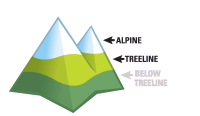
What Elevation?
Which Slopes?

Chances of Avalanches?

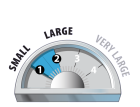
Expected Size?
Wind slabs can be found at treeline and alpine elevations. Recent extreme winds have stripped some aspects and may have left wind slabs further down slope than normal.
Travel and Terrain Advice
- Back off if you encounter whumpfing, hollow sounds or shooting cracks.
- Use ridges or ribs to avoid areas of wind loaded snow.
Avalanche Summary
A timber sledder triggered and was caught in a small avalanche on a road cut on Sunday. It occurred a little below treeline, south of the Crowsnest. Avalanche conditions seem especially touchy in this type of terrain right now. Give extra thought to the presence of terrain traps like roads, gullies and trees. Even a small avalanche can have increased consequences in combination with a terrain trap.
Reports over the last few days have been limited, but recent whumpfing and a bunch of persistent slabs last week are all evidence of this problem. With warming or increased load by snow and/or wind-loading, persistent slab activity is likely to increase again.
Snowpack Summary
The snowpack is variable across the region, but the two key concerns are touchy persistent slabs and wind slabs. Wind slabs may exist lower on the slope than normal, due to recent extreme south-west winds. In some parts of the region, windward alpine slopes are scoured; and variable wind slabs are found at treeline and alpine elevations.
A touchy weak layer from mid-December (predominantly feathery surface hoar crystals and/or a sun crust) is found at treeline and below. Slabs are failing very easily on this layer with the weight of a person or machine.
Deeper in the snowpack, an early season rain crust and sugary facets make up the picture. Overall snowpack depths are variable across the region. It's generally shallower in the east.
Weather Forecast
TUESDAY: Cloudy with snow. Snowfall amounts are hard to call. One senior meteorologist is predicting a 'Fernie effect', which could bring up to 40 cm of dry snow to parts of the South Rockies in short order late in the day. Light to moderate winds. Alpine temperature near -6.
WEDNESDAY: Moderate westerly winds. Light snow. Alpine temperature near -15.
THURSDAY: Moderate to strong winds. Light snow. Alpine temperature near -15.
Avalanche Forecasts in your Inbox
Avalanche Canada has switched to an RSS feed for its daily forecasts. This is a much more flexible method that allows automatic delivery to your email inbox, or to an RSS reader of your choice.
What are RSS feeds?
RSS (Really Simple Syndication) is a popular standardized file format allowing up-to-date delivery of web-based content. RSS feeds enable you to receive content updates from websites, delivered to your email through an RSS aggregator (such as blogtrottr.com) or viewed through applications called RSS readers (such as feedly.com).
Set up an RSS feed for your email:
Select a RSS aggregator
- South Rockies URL:
http://www.avalanche.ca/api/forecasts/south-rockies.rss - Copy the url and paste it into the appropriate field of your RSS aggregator.
- Fill in your email address.
- Voila! Watch the Avalanche Canada forecast roll into your inbox.
Forecast Disclaimer
Avalanche Canada's Public Avalanche Bulletin, and other information and services provided by Avalanche Canada, are intended for personal and recreational purposes only.
**THIS INFORMATION IS PROVIDED "AS IS" AND IN NO EVENT SHALL THE PROVIDERS BE LIABLE FOR ANY DAMAGES, INCLUDING, WITHOUT LIMITATION, DAMAGES RESULTING FROM DISCOMFORT, INJURY, OR DEATH, CLAIMS BY THIRD PARTIES OR FOR OTHER SIMILAR COSTS, OR ANY SPECIAL, INCIDENTAL, OR CONSEQUENTIAL DAMAGES, ARISING OUT OF THE USE OF THE INFORMATION.**
The user acknowledges that it is impossible to accurately predict natural events such as avalanches in every instance, and uses the data in this bulletin with this always foremost in mind. The accuracy or reliability of the data is not guaranteed or warranted in any way and the Providers disclaim liability of any kind whatsoever, including, without limitation, liability for quality, performance, merchantability and fitness for a particular purpose arising out of the use, or inability to use the data.
New snow may overload an already touchy weak layer, making avalanches especially likely in below treeline terrain.