Avalanche Forecast
Sea To Sky

Temperatures of up to 10C are expected. This will destabilize surface snow and could also release storm slab avalanches at higher elevations.
Avalanche Problem 1: Loose Wet
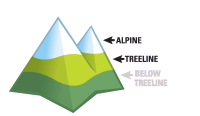
What Elevation?

Which Slopes?

Chances of Avalanches?

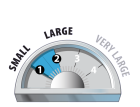
Expected Size?
Travel and Terrain Advice
- Avoid exposure to terrain traps where the consequences of a small avalanche could be serious.
- Minimize exposure to steep slopes on warm or sunny days.
- Use extra caution on slopes if the snow is moist or wet.
Avalanche Problem 2: Storm Slabs
What Elevation?
Which Slopes?
Chances of Avalanches?

Expected Size?
Storm slabs are expected to respond to alpine temperatures of up to 10C on slopes above 1500 m.
Travel and Terrain Advice
- Use extra caution on solar slopes or if the snow is moist or wet.
- The new snow may require a few days to settle and stabilize.
- Be cautious as you transition into wind affected terrain.
Avalanche Summary
Under rapid warming conditions, slab avalanches are possible above 1500 m where recent new snow has fallen. Loose snow avalanches are possible on steep terrain at all elevations, but will be most likely on southerly aspects if the sun comes out.
Snowpack Summary
Warm temperatures at all elevations are consolidating the snowpack and making the surface moist. At elevations above approximately 1500 m precipitation from the previous storm fell as snow, while below that elevation, rain fell. At higher elevations, it's possible a layer of cold snow has become trapped under the most recent storm slab, increasing the likelihood of seeing slab avalanche activity. Below the new storm snow, you'll find about a thick crust buried 30-50 cm below the surface that was buried on January 6. This crust exists up to about 2000m.
Beneath the January 6 crust, the lower snowpack is generally strong and well settled.
Weather Forecast
Sunday: Warm, dry and sunny. Freezing level rising to 3400m. Temperatures at 2000m expected to reach 10C. Light winds.
Monday: Slightly cooler temperatures, but still a warm day. Freezing level around 2500m. Temperatures at 2000m around 5C. Cloud building through the day with rain starting in the afternoon or evening.
Tuesday: Rain to around 2000 m with snow above. Amounts: 15-20mm. Strong southeasterly winds.
Avalanche Forecasts in your Inbox
Avalanche Canada has switched to an RSS feed for its daily forecasts. This is a much more flexible method that allows automatic delivery to your email inbox, or to an RSS reader of your choice.
What are RSS feeds?
RSS (Really Simple Syndication) is a popular standardized file format allowing up-to-date delivery of web-based content. RSS feeds enable you to receive content updates from websites, delivered to your email through an RSS aggregator (such as blogtrottr.com) or viewed through applications called RSS readers (such as feedly.com).
Set up an RSS feed for your email:
Select a RSS aggregator
- Sea To Sky URL:
http://www.avalanche.ca/api/forecasts/sea-to-sky.rss - Copy the url and paste it into the appropriate field of your RSS aggregator.
- Fill in your email address.
- Voila! Watch the Avalanche Canada forecast roll into your inbox.
Forecast Disclaimer
Avalanche Canada's Public Avalanche Bulletin, and other information and services provided by Avalanche Canada, are intended for personal and recreational purposes only.
**THIS INFORMATION IS PROVIDED "AS IS" AND IN NO EVENT SHALL THE PROVIDERS BE LIABLE FOR ANY DAMAGES, INCLUDING, WITHOUT LIMITATION, DAMAGES RESULTING FROM DISCOMFORT, INJURY, OR DEATH, CLAIMS BY THIRD PARTIES OR FOR OTHER SIMILAR COSTS, OR ANY SPECIAL, INCIDENTAL, OR CONSEQUENTIAL DAMAGES, ARISING OUT OF THE USE OF THE INFORMATION.**
The user acknowledges that it is impossible to accurately predict natural events such as avalanches in every instance, and uses the data in this bulletin with this always foremost in mind. The accuracy or reliability of the data is not guaranteed or warranted in any way and the Providers disclaim liability of any kind whatsoever, including, without limitation, liability for quality, performance, merchantability and fitness for a particular purpose arising out of the use, or inability to use the data.
Very warm temperatures will certainly release loose snow avalanches in steep terrain. Slopes that are affected by the sun are more likely to produce avalanches that gain mass.