Avalanche Forecast
Purcells

The snowpack is complex. Three active weak layers remain sensitive to human triggering. The easy solution is to choose simple terrain free of overhead hazard as the snowpack adjusts.
Avalanche Problem 1: Storm Slabs
What Elevation?

Which Slopes?

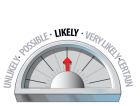
Chances of Avalanches?
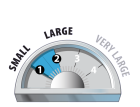
Expected Size?
Travel and Terrain Advice
- Carefully investigate the bond of the new snow before stepping out into more challenging terrain.
- Be very cautious as you transition into wind affected terrain, wind slabs may be deep and touchy.
- If triggered the storm slabs may step down to deeper layers resulting in large avalanches.
Avalanche Problem 2: Persistent Slabs
What Elevation?
Which Slopes?
Chances of Avalanches?

Expected Size?

The riding conditions may be great, but we can't forget about the persistent weak layers lurking in our snowpack that remain quite capable of producing very large avalanches. Keep the terrain choices reined in as the snowpack adjusts to the new load.
Travel and Terrain Advice
- Good day to make conservative terrain choices and watch for clues of instability.
- Numerous large avalanches have run on these layers in well supported, treed terrain.
Avalanche Summary
Avalanche activity on Thursday included wind slab, storm slab and persistent slab activity. Storm slabs were reported mostly to size 1.5 on all aspects at tree line. One size 3 naturally triggered persistent slab avalanche was reported in the south of the region running on a northeast aspect in the alpine. Natural and explosives triggered wind slab avalanches were reported running to size 2 on east and north aspects in the alpine and tree line.
Snowpack Summary
The current snowpack is complex, we now have three active weak layers that we are monitoring.
10-30cm of storm snow now sits on a newly formed crust and/or surface hoar interface. Prior to the storm the crust was reportedly widespread; high elevation north is likely one of the few crust-free zones. The now buried surface hoar is 10 to 30mm in size and was reportedly present at all elevations before the storm. Looking deeper, a persistent weak layer known as the early January interface is 40 to 80 cm below the surface. It is composed of surface hoar on sheltered slopes as well as sun crust on steep solar aspects and is present at all elevation bands. Recent snowpack tests have shown sudden results with moderate loads. Additionally, yet another persistent weak layer buried mid-December consisting of a facet/surface hoar/crust combination, is buried 40 to 110 cm deep. It is most problematic at and below tree line. This interface is not thought to be present in the alpine.
A rain crust buried in November is 90 to 150 cm deep and is thought to have gone dormant for the time being.
Weather Forecast
SATURDAY: Mix of sun, cloud and isolated flurries / Light to moderate southwest wind / Alpine temperature -8 / Freezing level 1200m
SUNDAY: Flurries, accumulation 5-10cm / Light to moderate southwest wind / Alpine temperature -8 / Freezing level 1200m
MONDAY: Scattered flurries / Light to moderate southwest wind / Alpine temperature -10 / Freezing level 800m
Avalanche Forecasts in your Inbox
Avalanche Canada has switched to an RSS feed for its daily forecasts. This is a much more flexible method that allows automatic delivery to your email inbox, or to an RSS reader of your choice.
What are RSS feeds?
RSS (Really Simple Syndication) is a popular standardized file format allowing up-to-date delivery of web-based content. RSS feeds enable you to receive content updates from websites, delivered to your email through an RSS aggregator (such as blogtrottr.com) or viewed through applications called RSS readers (such as feedly.com).
Set up an RSS feed for your email:
Select a RSS aggregator
- Purcells URL:
http://www.avalanche.ca/api/forecasts/purcells.rss - Copy the url and paste it into the appropriate field of your RSS aggregator.
- Fill in your email address.
- Voila! Watch the Avalanche Canada forecast roll into your inbox.
Forecast Disclaimer
Avalanche Canada's Public Avalanche Bulletin, and other information and services provided by Avalanche Canada, are intended for personal and recreational purposes only.
**THIS INFORMATION IS PROVIDED "AS IS" AND IN NO EVENT SHALL THE PROVIDERS BE LIABLE FOR ANY DAMAGES, INCLUDING, WITHOUT LIMITATION, DAMAGES RESULTING FROM DISCOMFORT, INJURY, OR DEATH, CLAIMS BY THIRD PARTIES OR FOR OTHER SIMILAR COSTS, OR ANY SPECIAL, INCIDENTAL, OR CONSEQUENTIAL DAMAGES, ARISING OUT OF THE USE OF THE INFORMATION.**
The user acknowledges that it is impossible to accurately predict natural events such as avalanches in every instance, and uses the data in this bulletin with this always foremost in mind. The accuracy or reliability of the data is not guaranteed or warranted in any way and the Providers disclaim liability of any kind whatsoever, including, without limitation, liability for quality, performance, merchantability and fitness for a particular purpose arising out of the use, or inability to use the data.
15 to 30cm sits on a combination of crust and surface hoar. Expect the slab to be deeper in wind exposed features and to be sensitive to human triggering.