Avalanche Forecast
Northwest Inland

New and old slabs aren't bonding well to underlying layers. Be cautious on southerly aspects when the sun is out -- it could weaken the snow and trigger avalanches.
Avalanche Problem 1: Storm Slabs
What Elevation?

Which Slopes?

Chances of Avalanches?

Expected Size?
Travel and Terrain Advice
- Approach lee and cross-loaded slopes with caution.
- Observe for signs of instability, such as cracking, whumpfing, and avalanche activity.
- Use caution above cliffs and terrain traps where small avalanches may have severe consequences.
Avalanche Summary
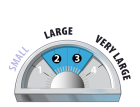
On Friday, there was evidence of a widespread natural cycle from the recent storm snow in the south of the region, with slab and loose avalanches generally failing in steep terrain at all elevations. These avalanches were small to large (size 1 to 3).
Snowpack Summary
Thursdays storm brought up to 40 cm of snow to the southern parts of the region, such as around Smithers. This overlies last weekends storm snow that has settled into a reactive slab about 50 cm thick. This slab is not bonding well to two layers of surface hoar, which exist on shaded aspects at high elevations as well as a melt-freeze crust on all aspects at treeline and below treeline elevations.
Deeper in the snowpack, layers of crusts, facets, and isolated surface hoar buried about 100 cm exist from mid-February. Near the bottom of the snowpack, weak and sugary facets are found in shallow, rocky snowpack areas. Storm slabs have stepped down to these facets recently, producing very large avalanches.
Weather Forecast
SUNDAY: Early morning snowfall then mostly sunny, accumulation 1 to 3 cm, light northeasterly winds, alpine temperature -10 C, freezing level 600 m.
MONDAY: Partly cloudy, light southerly winds, alpine temperature -11, freezing level 300 m.
TUESDAY: Mostly cloudy with early-morning snowfall, accumulation 1 to 3 cm, light southwesterly winds, alpine temperature -10 C, freezing level 500 m.
Avalanche Forecasts in your Inbox
Avalanche Canada has switched to an RSS feed for its daily forecasts. This is a much more flexible method that allows automatic delivery to your email inbox, or to an RSS reader of your choice.
What are RSS feeds?
RSS (Really Simple Syndication) is a popular standardized file format allowing up-to-date delivery of web-based content. RSS feeds enable you to receive content updates from websites, delivered to your email through an RSS aggregator (such as blogtrottr.com) or viewed through applications called RSS readers (such as feedly.com).
Set up an RSS feed for your email:
Select a RSS aggregator
- Northwest Inland URL:
http://www.avalanche.ca/api/forecasts/northwest-inland.rss - Copy the url and paste it into the appropriate field of your RSS aggregator.
- Fill in your email address.
- Voila! Watch the Avalanche Canada forecast roll into your inbox.
Forecast Disclaimer
Avalanche Canada's Public Avalanche Bulletin, and other information and services provided by Avalanche Canada, are intended for personal and recreational purposes only.
**THIS INFORMATION IS PROVIDED "AS IS" AND IN NO EVENT SHALL THE PROVIDERS BE LIABLE FOR ANY DAMAGES, INCLUDING, WITHOUT LIMITATION, DAMAGES RESULTING FROM DISCOMFORT, INJURY, OR DEATH, CLAIMS BY THIRD PARTIES OR FOR OTHER SIMILAR COSTS, OR ANY SPECIAL, INCIDENTAL, OR CONSEQUENTIAL DAMAGES, ARISING OUT OF THE USE OF THE INFORMATION.**
The user acknowledges that it is impossible to accurately predict natural events such as avalanches in every instance, and uses the data in this bulletin with this always foremost in mind. The accuracy or reliability of the data is not guaranteed or warranted in any way and the Providers disclaim liability of any kind whatsoever, including, without limitation, liability for quality, performance, merchantability and fitness for a particular purpose arising out of the use, or inability to use the data.
Recent storm slabs are found in the south of the region and older slabs exist in the north. Very large avalanches have occurred, as the slabs are not bonding well to underlying layers of surface hoar, crusts, or sugary facets in thin snowpack areas.