Avalanche Forecast
Northwest Coastal

The recent stormy weather has dumped as much as 110 cm of new snow on last week's crust. This has created reactive storm slabs and there have been reports of large avalanches. Use a conservative approach and terrain selection.
Avalanche Problem 1: Storm Slabs
What Elevation?

Which Slopes?

Chances of Avalanches?

Expected Size?

Travel and Terrain Advice
- Use conservative route selection, choose moderate angled and supported terrain with low consequence.
- The new snow will require several days to settle and stabilize.
- Be cautious as you transition into wind affected terrain.
Avalanche Problem 2: Deep Persistent Slabs
What Elevation?
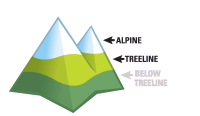
Which Slopes?
Chances of Avalanches?

Expected Size?
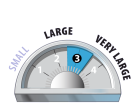
This layer has been inactive. However, with the increasing load of new snow this layer may become reactive. Something to keep on your radar.
Travel and Terrain Advice
- If triggered the storm slabs may step down to deeper layers resulting in very large avalanches.
Avalanche Summary
No recent natural avalanche activity has been reported. On Wednesday, an explosive triggered slab avalanche was reported up to size 2.5 in the alpine. The aspect is unknown. Earlier in the week, observations from the Shames area reported audible avalanches from across the valley and shooting cracks within the recent storm snow. The recent storm snow will likely take time to settle and bond. Travel in avalanche terrain will require conservative route selection and terrain choices. Please send your recent observations to the Mountain Information Network. Give info get info.
Snowpack Summary
Snow accumulations of 80-100 cm of storm snow in the southern part of the region now lies on the supportive 5-10 cm thick, November 23 rain crust from last week. Winds associated with the new snow has formed reactive wind slabs on leeward slopes. Below this crust is a weak layer that formed in late October and is now buried 120-160 cm within the snowpack. Beneath this October crust is a 20-30 cm thick layer consisting of several thin crusts and facets (sugary snow). Recent snowpack tests and observations indicate that that the new snow is likely reactive to rider triggers.
Reports further north near Ningunsaw, describe a much shallower facetted snowpack 60-120 cm.
Weather Forecast
Friday: Snow amounts 5-15 cm with moderate South West wind. Alpine temperature -5. Freezing level 500 m and dropping.
Saturday: Snow amounts 5-10 cm with light to moderate South West wind. Alpine temperature -7. Freezing level valley bottom.
Sunday: Mix of sun and cloud. Light to moderate North West wind. Alpine temperature -7. Freezing level valley bottom.
Visit the Mountain Weather Forecast for more details.
Avalanche Forecasts in your Inbox
Avalanche Canada has switched to an RSS feed for its daily forecasts. This is a much more flexible method that allows automatic delivery to your email inbox, or to an RSS reader of your choice.
What are RSS feeds?
RSS (Really Simple Syndication) is a popular standardized file format allowing up-to-date delivery of web-based content. RSS feeds enable you to receive content updates from websites, delivered to your email through an RSS aggregator (such as blogtrottr.com) or viewed through applications called RSS readers (such as feedly.com).
Set up an RSS feed for your email:
Select a RSS aggregator
- Northwest Coastal URL:
http://www.avalanche.ca/api/forecasts/northwest-coastal.rss - Copy the url and paste it into the appropriate field of your RSS aggregator.
- Fill in your email address.
- Voila! Watch the Avalanche Canada forecast roll into your inbox.
Forecast Disclaimer
Avalanche Canada's Public Avalanche Bulletin, and other information and services provided by Avalanche Canada, are intended for personal and recreational purposes only.
**THIS INFORMATION IS PROVIDED "AS IS" AND IN NO EVENT SHALL THE PROVIDERS BE LIABLE FOR ANY DAMAGES, INCLUDING, WITHOUT LIMITATION, DAMAGES RESULTING FROM DISCOMFORT, INJURY, OR DEATH, CLAIMS BY THIRD PARTIES OR FOR OTHER SIMILAR COSTS, OR ANY SPECIAL, INCIDENTAL, OR CONSEQUENTIAL DAMAGES, ARISING OUT OF THE USE OF THE INFORMATION.**
The user acknowledges that it is impossible to accurately predict natural events such as avalanches in every instance, and uses the data in this bulletin with this always foremost in mind. The accuracy or reliability of the data is not guaranteed or warranted in any way and the Providers disclaim liability of any kind whatsoever, including, without limitation, liability for quality, performance, merchantability and fitness for a particular purpose arising out of the use, or inability to use the data.
Building storm slabs will be most prominent and reactive to rider triggers above treeline especially where the storm snow has been affected by the wind.