Avalanche Forecast
Kananaskis Country, Alberta Parks

It's a tricky time right now. Loose dry, cornices, wind slabs and persistent slab avalanche problems all exist. Keep the eyes open and the brain tuned in.
Avalanche Problem 1: Wind Slabs
What Elevation?
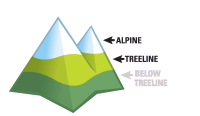
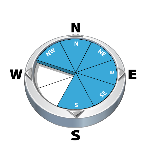
Which Slopes?
Chances of Avalanches?

Expected Size?

Travel and Terrain Advice
- Avoid steep lee and cross-loaded slopes
- Evaluate unsupported slopes critically.
Avalanche Problem 2: Persistent Slabs
What Elevation?
Which Slopes?

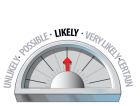
Chances of Avalanches?
Expected Size?

This layer appears to be the culprit for several avalanches in high treeline/low alpine terrain this week. Probing and digging will help locate it and assess how reactive it is.
Travel and Terrain Advice
- Avoid steep Southerly aspects.
Avalanche Problem 3: Cornices
What Elevation?

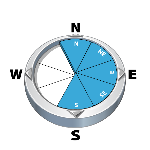
Which Slopes?
Chances of Avalanches?
Expected Size?
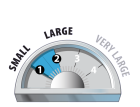
The flight today revealed enough cornice triggered avalanches to consider them a problem. Avoid being under them as they could trigger slabs below and travel far.
Travel and Terrain Advice
- Avoid steep slopes below cornices.
Avalanche Summary
Several older(early this week) slabs were noted. Many were thin alpine windslabs, cornice triggered and averaged size 2. East aspects were also a theme.
Snowpack Summary
A flight through the region today gave us a good look around. Most alpine areas have widespread wind slabs of various densities, but the tighter, sheltered drainages are still holding decent snow below ridgeline. Treeline has less wind affect overall with soft snow on sheltered north aspects. The aspect begins to play a role at this elevation. The Mar 15 crust is widespread on any solar aspect. It is down 20-40cm and so far has a decent bond to the surface layers. Intense sun today will likely form another thin surface crust on south aspects. Overall, the snowpack is reasonably solid, but still a ways from our usual spring like snowpack typical of late march.
Weather Forecast
Flurries will start tonight and give about 4cm . Alpine temps will be -9 with 45km/hr winds. Tomorrow the flurries will continue and drop another 10cm. Overall winds will drop to 15km/hr but gusts will continue to reach 45km/hr. Alpine temps will hit -7C.
Avalanche Forecasts in your Inbox
Avalanche Canada has switched to an RSS feed for its daily forecasts. This is a much more flexible method that allows automatic delivery to your email inbox, or to an RSS reader of your choice.
What are RSS feeds?
RSS (Really Simple Syndication) is a popular standardized file format allowing up-to-date delivery of web-based content. RSS feeds enable you to receive content updates from websites, delivered to your email through an RSS aggregator (such as blogtrottr.com) or viewed through applications called RSS readers (such as feedly.com).
Set up an RSS feed for your email:
Select a RSS aggregator
- Kananaskis Country, Alberta Parks URL:
http://www.avalanche.ca/api/forecasts/kananaskis.rss - Copy the url and paste it into the appropriate field of your RSS aggregator.
- Fill in your email address.
- Voila! Watch the Avalanche Canada forecast roll into your inbox.
Forecast Disclaimer
Avalanche Canada's Public Avalanche Bulletin, and other information and services provided by Avalanche Canada, are intended for personal and recreational purposes only.
**THIS INFORMATION IS PROVIDED "AS IS" AND IN NO EVENT SHALL THE PROVIDERS BE LIABLE FOR ANY DAMAGES, INCLUDING, WITHOUT LIMITATION, DAMAGES RESULTING FROM DISCOMFORT, INJURY, OR DEATH, CLAIMS BY THIRD PARTIES OR FOR OTHER SIMILAR COSTS, OR ANY SPECIAL, INCIDENTAL, OR CONSEQUENTIAL DAMAGES, ARISING OUT OF THE USE OF THE INFORMATION.**
The user acknowledges that it is impossible to accurately predict natural events such as avalanches in every instance, and uses the data in this bulletin with this always foremost in mind. The accuracy or reliability of the data is not guaranteed or warranted in any way and the Providers disclaim liability of any kind whatsoever, including, without limitation, liability for quality, performance, merchantability and fitness for a particular purpose arising out of the use, or inability to use the data.
Lots of windslabs out there right now. Crossloaded and unsupported terrain should be treated with respect.