Avalanche Forecast
South Columbia

Winter is loosening its grip as sunshine and warm temperatures team up to test the snowpack in the coming days.
Check out the latest Forecasters' Blog for more details: http://www.avalanche.ca/blogs/2018-03-09-first-big-warm-up
Avalanche Problem 1: Loose Wet
What Elevation?

Which Slopes?

Chances of Avalanches?

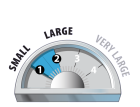
Expected Size?
Travel and Terrain Advice
- Be cautious of sluffing in steep terrain, particularly where the debris flows into terrain traps.
Avalanche Problem 2: Storm Slabs
What Elevation?
Which Slopes?

Chances of Avalanches?

Expected Size?
Newly formed storm slabs remain a concern, especially on solar aspects where sunshine could act as a natural trigger and where buried crust may act as a sliding layer.
Travel and Terrain Advice
- Minimize exposure to steep, sun exposed slopes when the solar radiation is strong.
- Extra caution needed around cornices with current conditions.
- Use ridges or ribs to avoid pockets of wind loaded snow.
Avalanche Problem 3: Persistent Slabs
What Elevation?
Which Slopes?
Chances of Avalanches?

Expected Size?

Persistent slabs are most likely to be triggered with a large load like cornice fall; or by a person in a thin or variable-depth snowpack spot. Solar warming could make persistent slabs easier to trigger.
Travel and Terrain Advice
- Avoid steep convexities or areas with a thin or variable snowpack.
- Pay attention to overhead hazards like cornices which could trigger persistent slabs.
- Choose regroup spots away from avalanche paths.
Avalanche Summary
Reports from Thursday included several observations of size 1 storm slabs and wind slabs releasing with ski cutting above 1800 metres. A snowcat also managed to trigger a size 2 persistent slab that failed on the mid-January weak layer by using its blade to undercut a slope known to harbour surface hoar.
A natural cycle of size 1-2.5 loose wet avalanches was reported on south-facing slopes on Wednesday. A handful of very large slab avalanches have been reported over the last couple of days: cornice fall triggered a size 2.5 slab on a north-west aspect at 2700 m and sun triggered a size 2.5 persistent slab on a south aspect at 2200 m. A chunk of falling glacial ice triggered a size 3.5 slab on a north-west aspect.
Avalanche activity is expected to increase as we move into a period of intense sun and prolonged warming. Predictable loose wet avalanches from steep, sunny terrain should be easy to manage. The trickier problem will emerge as warmth penetrates into the snowpack to tickle deeper persistent weak layers. The next few days will be a time to avoid exposure to large sun-exposed features and keep well away from corniced slopes.
Snowpack Summary
Around 20-30 cm of new snow has formed new storm slabs which overlie sun crusts on solar aspects. This latest snow sits on well-settled storm snow from regular snowfalls over the past couple of weeks. Several other sun crust layers may be found within this storm snow on solar aspects.
A couple of layers buried in mid-late February (down around 70-120 cm) are variably reactive, but both have the potential to create surprisingly large avalanches if triggered. Initially, these interfaces were most reactive on solar aspects, where they present as buried sun crusts. However, persistent slabs have been triggered on shady aspects too, where surface hoar and/or facets exist.
Deeper persistent weak layers from January and December are generally considered dormant, but could wake up with forecast warming, a surface avalanche stepping down, cornice fall, or a human trigger in a shallow or variable-depth snowpack area. These layers consist of sun crust, surface hoar and/or facets. Facets linger at the base of the snowpack.
Weather Forecast
Saturday: A mix of sun and cloud, clearing over the day. Light southeast winds. Freezing level rising to 1500 metres with alpine high temperatures around -4.
Sunday: A mix of sun and cloud, becoming cloudier over the day. Light south winds. Freezing level rising to 1800 metres with alpine high temperatures of -2.
Monday: A mix of sun and cloud. Light southeast winds. Freezing level rising to 2100 metres with alpine high temperatures of +1.
Avalanche Forecasts in your Inbox
Avalanche Canada has switched to an RSS feed for its daily forecasts. This is a much more flexible method that allows automatic delivery to your email inbox, or to an RSS reader of your choice.
What are RSS feeds?
RSS (Really Simple Syndication) is a popular standardized file format allowing up-to-date delivery of web-based content. RSS feeds enable you to receive content updates from websites, delivered to your email through an RSS aggregator (such as blogtrottr.com) or viewed through applications called RSS readers (such as feedly.com).
Set up an RSS feed for your email:
Select a RSS aggregator
- South Columbia URL:
http://www.avalanche.ca/api/forecasts/south-columbia.rss - Copy the url and paste it into the appropriate field of your RSS aggregator.
- Fill in your email address.
- Voila! Watch the Avalanche Canada forecast roll into your inbox.
Forecast Disclaimer
Avalanche Canada's Public Avalanche Bulletin, and other information and services provided by Avalanche Canada, are intended for personal and recreational purposes only.
**THIS INFORMATION IS PROVIDED "AS IS" AND IN NO EVENT SHALL THE PROVIDERS BE LIABLE FOR ANY DAMAGES, INCLUDING, WITHOUT LIMITATION, DAMAGES RESULTING FROM DISCOMFORT, INJURY, OR DEATH, CLAIMS BY THIRD PARTIES OR FOR OTHER SIMILAR COSTS, OR ANY SPECIAL, INCIDENTAL, OR CONSEQUENTIAL DAMAGES, ARISING OUT OF THE USE OF THE INFORMATION.**
The user acknowledges that it is impossible to accurately predict natural events such as avalanches in every instance, and uses the data in this bulletin with this always foremost in mind. The accuracy or reliability of the data is not guaranteed or warranted in any way and the Providers disclaim liability of any kind whatsoever, including, without limitation, liability for quality, performance, merchantability and fitness for a particular purpose arising out of the use, or inability to use the data.
Sun on new snow is likely to lead to loose moist avalanches which could run surprisingly far.