Avalanche Forecast
Sea To Sky

A buried weak layer is capable of producing large human-triggered avalanches. Stick to small supported terrain features and be cautious when slopes are getting hit by direct sunlight.
Avalanche Problem 1: Persistent Slabs
What Elevation?

Which Slopes?

Chances of Avalanches?

Expected Size?

Travel and Terrain Advice
- Minimize exposure to steep, sun exposed slopes when the solar radiation is strong.
- Choose well supported terrain without convexities.
- Use caution on open slopes and convex rolls at treeline where buried surface hoar may be preserved.
Avalanche Problem 2: Cornices
What Elevation?

Which Slopes?
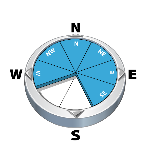
Chances of Avalanches?

Expected Size?

Continued snowfall and strong wind from around the clock has formed large cornices on many ridgelines. Cornices are inherently unstable, unpredictable, and demand respect, especially when the sun is out.
Travel and Terrain Advice
- Be careful with wind loaded pockets
- Give cornices a wide berth when traveling on or below ridges.
- Firm cornices may pull back into flat terrain at ridgetop if they fail.
Avalanche Summary
No notable avalanches were reported on Monday, but reports from the weekend highlight a touchy persistent slab problem in this region.
Numerous reports of whumpfing around upper treeline elevations were reported, as well as a few large avalanches. An MCR report from the Blackcomb backcountry on Sunday describes a size 3 avalanche that was remotely triggered on a west aspect around 1900 m and presumably failed on the buried surface hoar layer (see photo and details here). A size 2 slab avalanche failed in a north-facing chute at a similar elevation and triggered additional smaller avalanches on nearby slopes. Closer to Squamish, a natural size 2 avalanche failed on a south aspect at 1750 m (see photo and details here). These avalanches highlight a persistent slab problem that exists on all aspects around treeline elevations. This type of problem tends to take a while to heal, and avalanches could remain reactive to human triggers throughout the week.
Snowpack Summary
A thin sun crust has formed on solar aspects and the surface is wind affected in most exposed terrain. Last week's storms buried a weak layer composed of soft facets, surface hoar, and/or crust that is roughly 50-100 cm below the surface. This layer has produced whumpfing, sudden results in snowpack tests, and some remotely triggered avalanches. Lots of the activity has been on buried surface hoar on north aspects at upper treeline elevations. The snowpack is well settled and strong beneath this interface.
Variable winds in the past month have produced cornices on many ridgelines. They will become touchier as they grow in size, as temperatures rise, and when they are subject to the strong late-winter sun on clear days.
Weather Forecast
WEDNESDAY: Sunny in the morning with increasing clouds in the afternoon, light southwest wind, freezing level rising to around 1400 m.
THURSDAY: Flurries increasing throughout the day with 5-10 cm of snow by the afternoon, moderate southwest wind, freezing level rising to around 1200 m.
FRIDAY: Another 5-10 cm of snow with freezing level rising to around 1200 m.
Avalanche Forecasts in your Inbox
Avalanche Canada has switched to an RSS feed for its daily forecasts. This is a much more flexible method that allows automatic delivery to your email inbox, or to an RSS reader of your choice.
What are RSS feeds?
RSS (Really Simple Syndication) is a popular standardized file format allowing up-to-date delivery of web-based content. RSS feeds enable you to receive content updates from websites, delivered to your email through an RSS aggregator (such as blogtrottr.com) or viewed through applications called RSS readers (such as feedly.com).
Set up an RSS feed for your email:
Select a RSS aggregator
- Sea To Sky URL:
http://www.avalanche.ca/api/forecasts/sea-to-sky.rss - Copy the url and paste it into the appropriate field of your RSS aggregator.
- Fill in your email address.
- Voila! Watch the Avalanche Canada forecast roll into your inbox.
Forecast Disclaimer
Avalanche Canada's Public Avalanche Bulletin, and other information and services provided by Avalanche Canada, are intended for personal and recreational purposes only.
**THIS INFORMATION IS PROVIDED "AS IS" AND IN NO EVENT SHALL THE PROVIDERS BE LIABLE FOR ANY DAMAGES, INCLUDING, WITHOUT LIMITATION, DAMAGES RESULTING FROM DISCOMFORT, INJURY, OR DEATH, CLAIMS BY THIRD PARTIES OR FOR OTHER SIMILAR COSTS, OR ANY SPECIAL, INCIDENTAL, OR CONSEQUENTIAL DAMAGES, ARISING OUT OF THE USE OF THE INFORMATION.**
The user acknowledges that it is impossible to accurately predict natural events such as avalanches in every instance, and uses the data in this bulletin with this always foremost in mind. The accuracy or reliability of the data is not guaranteed or warranted in any way and the Providers disclaim liability of any kind whatsoever, including, without limitation, liability for quality, performance, merchantability and fitness for a particular purpose arising out of the use, or inability to use the data.
A layer of surface hoar, sugary facets, and/or crust is buried 50-100 cm deep and has produced widespread whumpfing, concerning snowpack test results, and a few large remotely triggered avalanches. Upper treeline elevations are the greatest concern.