Avalanche Forecast
Avalanche Bulletin - Glacier National Park

Ongoing winds continue to load storm slabs. Extra caution is required when transitioning into exposed and wind-loaded terrain.
Avalanche Problem 1: Storm Slabs
What Elevation?

Which Slopes?

Chances of Avalanches?

Expected Size?

Travel and Terrain Advice
- Use caution in lee areas in the alpine and treeline. Storm snow is forming reactive slabs.
- If triggered the storm slabs may step down to deeper layers resulting in large avalanches.
Avalanche Problem 2: Persistent Slabs
What Elevation?
Which Slopes?
Chances of Avalanches?

Expected Size?
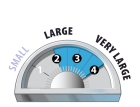
These slabs will be most susceptible to triggering in shallow areas. This type of instability will linger for a while yet. The significant storms seen recently have overloaded these layers, priming slopes to fail only awaiting a trigger.
Travel and Terrain Advice
- Avoid thin, rocky or unsupported slopes.
- Be aware of the potential for large avalanches due to the presence of buried surface hoar.
Avalanche Summary
A natural avalanche cycle occurred yesterday, corresponding to loading from strong daytime winds. A size 3.0 and four size 2-2.5 natural avalanches were recorded in the highway corridor east of Rogers Pass. A size 2.5 was reported in
Connaught drainage in the Cheops North 1 slide path that ran to the valley bottom, nearly hitting the skin track.
Snowpack Summary
Storm snow remains unsettled with up to 50cm of ski penetration. Ongoing southerly winds have created reactive pockets of wind slab in exposed areas. On solar aspects, a well developed crust is buried 40cm. Persistent weak layers from January and December are now buried 150-200cm.
Weather Forecast
Snowy conditions today with 5cm of accumulation. Cool temperatures with an alpine high of -10.0 and westerly winds gusting to 45km/h. A weak low pressure system spreads isolated flurries into late Saturday. On Sunday, cold arctic air replaces the low pressure, with temperatures dipping down to the nether regions of tolerable.
Avalanche Forecasts in your Inbox
Avalanche Canada has switched to an RSS feed for its daily forecasts. This is a much more flexible method that allows automatic delivery to your email inbox, or to an RSS reader of your choice.
What are RSS feeds?
RSS (Really Simple Syndication) is a popular standardized file format allowing up-to-date delivery of web-based content. RSS feeds enable you to receive content updates from websites, delivered to your email through an RSS aggregator (such as blogtrottr.com) or viewed through applications called RSS readers (such as feedly.com).
Set up an RSS feed for your email:
Select a RSS aggregator
- Avalanche Bulletin - Glacier National Park URL:
http://www.avalanche.ca/api/forecasts/glacier.rss - Copy the url and paste it into the appropriate field of your RSS aggregator.
- Fill in your email address.
- Voila! Watch the Avalanche Canada forecast roll into your inbox.
Forecast Disclaimer
Avalanche Canada's Public Avalanche Bulletin, and other information and services provided by Avalanche Canada, are intended for personal and recreational purposes only.
**THIS INFORMATION IS PROVIDED "AS IS" AND IN NO EVENT SHALL THE PROVIDERS BE LIABLE FOR ANY DAMAGES, INCLUDING, WITHOUT LIMITATION, DAMAGES RESULTING FROM DISCOMFORT, INJURY, OR DEATH, CLAIMS BY THIRD PARTIES OR FOR OTHER SIMILAR COSTS, OR ANY SPECIAL, INCIDENTAL, OR CONSEQUENTIAL DAMAGES, ARISING OUT OF THE USE OF THE INFORMATION.**
The user acknowledges that it is impossible to accurately predict natural events such as avalanches in every instance, and uses the data in this bulletin with this always foremost in mind. The accuracy or reliability of the data is not guaranteed or warranted in any way and the Providers disclaim liability of any kind whatsoever, including, without limitation, liability for quality, performance, merchantability and fitness for a particular purpose arising out of the use, or inability to use the data.
Natural and skier triggered avalanches are still resulting from this reactive storm slab problem. Loading from moderate to strong southerly winds has increased the likelihood storm slabs being triggered and propagating, especially in exposed areas.