Avalanche Forecast
Kananaskis Country, Alberta Parks

Avoid avalanche terrain. A large-scale avalanche cycle is on-going.
Avalanche Problem 1: Wind Slabs
What Elevation?
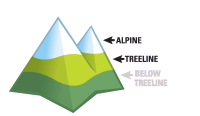
Which Slopes?

Chances of Avalanches?

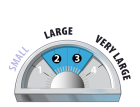
Expected Size?
Travel and Terrain Advice
- Avoid all avalanche terrain.
Avalanche Problem 2: Persistent Slabs
What Elevation?

Which Slopes?
Chances of Avalanches?
Expected Size?
Several buried weak layers of concern exist down between 50 and 150cm. Loose dry slides or wind slabs initiated in the upper snowpack are often stepping down to these weak layers.
Travel and Terrain Advice
- Avoid exposure to overhead avalanche terrain, large avalanches may reach the end of run out zones.
- Avoid convex rolls at and below treeline where buried surface hoar may be preserved.
- Carefully evaluate terrain features by digging and testing on adjacent, safe slopes.
Avalanche Problem 3: Loose Dry
What Elevation?

Which Slopes?
Chances of Avalanches?

Expected Size?
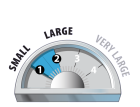
Ice climbers, avoid gullies. Expect sluffing in steeper terrain. Some sluffs are triggering slabs on the underlying slopes.
Travel and Terrain Advice
- Avoid areas with overhead hazard.
- Sluffs may trigger deeper instabilities.
Avalanche Summary
A large-scale natural avalanche cycle occurred in the past 24hrs on all aspects in the Alpine up to size 3.5. A few slabs up to size 2.0 also initiated at Treeline. Smaller loose dry avalanches were widespread across all Treeline and Alpine terrain today. Explosives control work today on EEOR produced size 2.0 avalanches.
Snowpack Summary
Another 15cm of new snow brings recent storm snow totals to between 50 and 60cm. This has fallen with relatively little wind effect in the southern part of the forecast area, but more wind effect is evident up north. In the Alpine fresh wind slabs have formed on all aspects. A large natural avalanche cycle occurred over the last 24hrs associated with these fresh wind slabs. In some cases, avalanches stepped down to deeper weak layers such as the Jan 6 surface hoar and the Dec 15 surface hoar/sun crust/facet layer, producing large to very large avalanches. Forecasters continue to monitor multiple buried weak layers between 50 and 150cm down into the snowpack. In addition, the November crusts layers have recently become active in a few isolated avalanches in shallow snowpack areas.
Weather Forecast
Tuesday will be mainly cloudy with isolated flurries. Ridge-top winds will be from the west at 25 km/h and a high of -13 C. Another storm will bring up to 25cm of new snow late Wednesday and into Thursday.
Avalanche Forecasts in your Inbox
Avalanche Canada has switched to an RSS feed for its daily forecasts. This is a much more flexible method that allows automatic delivery to your email inbox, or to an RSS reader of your choice.
What are RSS feeds?
RSS (Really Simple Syndication) is a popular standardized file format allowing up-to-date delivery of web-based content. RSS feeds enable you to receive content updates from websites, delivered to your email through an RSS aggregator (such as blogtrottr.com) or viewed through applications called RSS readers (such as feedly.com).
Set up an RSS feed for your email:
Select a RSS aggregator
- Kananaskis Country, Alberta Parks URL:
http://www.avalanche.ca/api/forecasts/kananaskis.rss - Copy the url and paste it into the appropriate field of your RSS aggregator.
- Fill in your email address.
- Voila! Watch the Avalanche Canada forecast roll into your inbox.
Forecast Disclaimer
Avalanche Canada's Public Avalanche Bulletin, and other information and services provided by Avalanche Canada, are intended for personal and recreational purposes only.
**THIS INFORMATION IS PROVIDED "AS IS" AND IN NO EVENT SHALL THE PROVIDERS BE LIABLE FOR ANY DAMAGES, INCLUDING, WITHOUT LIMITATION, DAMAGES RESULTING FROM DISCOMFORT, INJURY, OR DEATH, CLAIMS BY THIRD PARTIES OR FOR OTHER SIMILAR COSTS, OR ANY SPECIAL, INCIDENTAL, OR CONSEQUENTIAL DAMAGES, ARISING OUT OF THE USE OF THE INFORMATION.**
The user acknowledges that it is impossible to accurately predict natural events such as avalanches in every instance, and uses the data in this bulletin with this always foremost in mind. The accuracy or reliability of the data is not guaranteed or warranted in any way and the Providers disclaim liability of any kind whatsoever, including, without limitation, liability for quality, performance, merchantability and fitness for a particular purpose arising out of the use, or inability to use the data.
Wind slabs are failing on all aspects in the Alpine and at Treeline producing large to very large avalanches. Be aware of exposure to run-out zones. In many cases these avalanches are stepping down to the deeper buried weak layers.