Avalanche Forecast
Kootenay Boundary

Dangerous snowpack conditions are widespread in the region. Numerous very large avalanches ran on deeply buried weak layers during the storm. The chances of human-triggering these deep layers remains dangerously high.
Avalanche Problem 1: Persistent Slabs
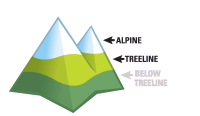
What Elevation?

Which Slopes?

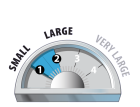
Chances of Avalanches?

Expected Size?

Travel and Terrain Advice
- Be mindful that deep instabilities are still present and have produced recent large avalanches.
- Be aware of the potential for large avalanches due to the presence of buried surface hoar.
Avalanche Problem 2: Wind Slabs
What Elevation?
Which Slopes?
Chances of Avalanches?

Expected Size?
Strong southwest winds have pressed and redistributed loose snow at the surface into stiff and reactive slabs. Windward aspects aren't exempt from the problem.
Travel and Terrain Advice
- If triggered, wind slabs may step down to deeper layers and result in large avalanches.
- Whumpfing, shooting cracks and recent avalanches are all strong indicators of unstable snowpack.
Avalanche Summary
Reports from Tuesday reflect increased visibility over terrain that was obscured during the storm. Evidence of a natural avalanche cycle involving each of our persistent weak layers was observed, with numerous avalanches ranging reaching Size 3.5 and several crown fractures up to 3 metres deep. These are believed to be some of the deepest crowns in the region's historical record.
Reports from Monday include observations of several natural storm slab releases from Size 1.5-2 as well as numerous explosives triggered storm slabs to Size 1.5 southeast of Nelson. One Size 3 persistent slab with a fracture depth of 100 cm was observed releasing naturally in the same area. Storm slab activity was focused on north through west aspects from 1800-2100 m and the persistent slab release occurred on a southeast aspect just under 2000 m.
Sunday's reports included one observation of two large persistent slabs releasing remotely on a wind loaded feature just below ridgetop in the Kootenay Pass area. Another remotely triggered Size 2.5 persistent slab was reported in the south Valhallas.
Looking forward, expect storm slabs and the persistent slabs beneath them to remain reactive to human triggers.
Snowpack Summary
Recent storms have brought around 100 cm of snow to the region over the last couple of weeks. Rising temperatures delivered some of the most recent precipitation as rain below about 1300 metres on Monday. Where it fell as snow, strong southwest winds have again redistributed it into touchy new wind slabs.
Aside from wind slab instabilities at the surface, the primary layer of concern from mid-January and is buried beneath all the storm snow at 80-110cm deep. It is composed of a mixture of weak surface hoar and/or a crust. Numerous recent natural avalanches to size 2.5 have been reported on this sensitive layer and human triggering large, destructive avalanches on this layer remains likely.
Below this layer lies a second crust/surface hoar interface buried early-January that is now 110-130 cm deep. Several recent avalanches have stepped down to this layer.
The mid-December surface hoar layer is buried 120-150 cm below the surface. This layer has continued to produce step down releases and "sudden" test results. It is most pronounced at treeline, but is also present below treeline .
Two laminated crusts created by rain events in late November lay just below the mid-December interface.
Weather Forecast
Wednesday: A mix of sun and cloud. Light west winds. Alpine high temperatures of -8.
Thursday: Cloudy with scattered flurries and 2-6 cm of new snow, increasing overnight. Light to moderate southwest winds. Alpine high temperatures of -6.
Friday: Cloudy with continuing flurries and 2-5 cm of new snow. Light to moderate southwest winds. Alpine high temperatures of -4.
Avalanche Forecasts in your Inbox
Avalanche Canada has switched to an RSS feed for its daily forecasts. This is a much more flexible method that allows automatic delivery to your email inbox, or to an RSS reader of your choice.
What are RSS feeds?
RSS (Really Simple Syndication) is a popular standardized file format allowing up-to-date delivery of web-based content. RSS feeds enable you to receive content updates from websites, delivered to your email through an RSS aggregator (such as blogtrottr.com) or viewed through applications called RSS readers (such as feedly.com).
Set up an RSS feed for your email:
Select a RSS aggregator
- Kootenay Boundary URL:
http://www.avalanche.ca/api/forecasts/kootenay-boundary.rss - Copy the url and paste it into the appropriate field of your RSS aggregator.
- Fill in your email address.
- Voila! Watch the Avalanche Canada forecast roll into your inbox.
Forecast Disclaimer
Avalanche Canada's Public Avalanche Bulletin, and other information and services provided by Avalanche Canada, are intended for personal and recreational purposes only.
**THIS INFORMATION IS PROVIDED "AS IS" AND IN NO EVENT SHALL THE PROVIDERS BE LIABLE FOR ANY DAMAGES, INCLUDING, WITHOUT LIMITATION, DAMAGES RESULTING FROM DISCOMFORT, INJURY, OR DEATH, CLAIMS BY THIRD PARTIES OR FOR OTHER SIMILAR COSTS, OR ANY SPECIAL, INCIDENTAL, OR CONSEQUENTIAL DAMAGES, ARISING OUT OF THE USE OF THE INFORMATION.**
The user acknowledges that it is impossible to accurately predict natural events such as avalanches in every instance, and uses the data in this bulletin with this always foremost in mind. The accuracy or reliability of the data is not guaranteed or warranted in any way and the Providers disclaim liability of any kind whatsoever, including, without limitation, liability for quality, performance, merchantability and fitness for a particular purpose arising out of the use, or inability to use the data.
The snowpack is complex and continues to produce very large avalanches on several weak layers buried 80 to 150 cm below the surface. A conservative approach and moderate-angled, simple terrain are good ways to manage a complex snowpack.