Avalanche Forecast
Avalanche Bulletin - Jasper National Park

Rapid loading on top of persistent weak layers is expected to create dangerous avalanche conditions over the next few days.
Closures of HW 93 (Icefield Parkway) will be in effect starting Jan 29 for control work.
511.Alberta.ca for updated info.
Avalanche Problem 1: Storm Slabs
What Elevation?

Which Slopes?

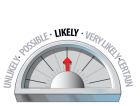
Chances of Avalanches?
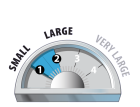
Expected Size?
Travel and Terrain Advice
- Minimize overhead exposure during periods of heavy loading from new snow, wind.
- The new snow will require several days to settle and stabilize.
Avalanche Problem 2: Persistent Slabs
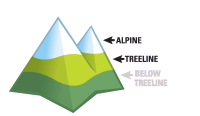
What Elevation?
Which Slopes?
Chances of Avalanches?

Expected Size?
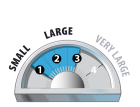
This problem is made up of 3 significant interfaces in the upper snowpack. Incoming new snow may overload these layers, which have recently been reactive to skier testing and explosive control work, producing a few very significant results.
Travel and Terrain Advice
- If triggered the storm slabs may step down to deeper layers resulting in large avalanches.
- Be aware of the potential for large, deep avalanches due to the presence of buried surface hoar.
Avalanche Problem 3: Loose Dry
What Elevation?
Which Slopes?
Chances of Avalanches?
Expected Size?

Watch for sluffing in steep terrain.
Travel and Terrain Advice
- The volume of sluffing could knock you over; choose your climb carefully and belay when exposed.
Avalanche Summary
Avalanche control on Parkers Ridge Friday produced 2 large avalanches, size 2 and 3 on a NE aspect running as a persistent slab. Numerous sloughs observed today from steep rocky terrain.
Snowpack Summary
Incoming new snow is building fresh storm slabs and is falling on a persistent slab made up of 3 weak interfaces in the top 30 to 50cm of the snowpack. Depth and distribution of these weak surface hoar/facet layers varies within the terrain; although buried surface hoar has consistently been found in sheltered features at TL.
Weather Forecast
Heavy snowfall Monday night, with amounts between 20-40cm possible for the Columbia Icefields area. Moderate SW winds to accompany this snowfall. Pressure rising mid-week as precipitation tapers. Temperatures will drop later in the week as an Arctic ridge establishes itself along the Eastern slopes of the Rockies.
Avalanche Forecasts in your Inbox
Avalanche Canada has switched to an RSS feed for its daily forecasts. This is a much more flexible method that allows automatic delivery to your email inbox, or to an RSS reader of your choice.
What are RSS feeds?
RSS (Really Simple Syndication) is a popular standardized file format allowing up-to-date delivery of web-based content. RSS feeds enable you to receive content updates from websites, delivered to your email through an RSS aggregator (such as blogtrottr.com) or viewed through applications called RSS readers (such as feedly.com).
Set up an RSS feed for your email:
Select a RSS aggregator
- Avalanche Bulletin - Jasper National Park URL:
http://www.avalanche.ca/api/forecasts/jasper.rss - Copy the url and paste it into the appropriate field of your RSS aggregator.
- Fill in your email address.
- Voila! Watch the Avalanche Canada forecast roll into your inbox.
Forecast Disclaimer
Avalanche Canada's Public Avalanche Bulletin, and other information and services provided by Avalanche Canada, are intended for personal and recreational purposes only.
**THIS INFORMATION IS PROVIDED "AS IS" AND IN NO EVENT SHALL THE PROVIDERS BE LIABLE FOR ANY DAMAGES, INCLUDING, WITHOUT LIMITATION, DAMAGES RESULTING FROM DISCOMFORT, INJURY, OR DEATH, CLAIMS BY THIRD PARTIES OR FOR OTHER SIMILAR COSTS, OR ANY SPECIAL, INCIDENTAL, OR CONSEQUENTIAL DAMAGES, ARISING OUT OF THE USE OF THE INFORMATION.**
The user acknowledges that it is impossible to accurately predict natural events such as avalanches in every instance, and uses the data in this bulletin with this always foremost in mind. The accuracy or reliability of the data is not guaranteed or warranted in any way and the Providers disclaim liability of any kind whatsoever, including, without limitation, liability for quality, performance, merchantability and fitness for a particular purpose arising out of the use, or inability to use the data.
Incoming new snow and wind will build fresh storm slabs.