Avalanche Forecast
Kananaskis Country, Alberta Parks

Mellow treeline terrain will be your best bet for good skiing right now. Avoid big alpine features right now.
Avalanche Problem 1: Wind Slabs
What Elevation?
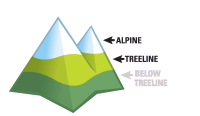
Which Slopes?
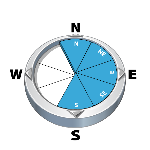
Chances of Avalanches?
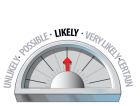
Expected Size?

Travel and Terrain Advice
- Avoid steep lee and cross-loaded slopes
- Be careful with wind loaded pockets, especially near ridge crests and roll-overs.
- Minimize overhead exposure; avalanches may reach the end of run out zones.
Avalanche Problem 2: Persistent Slabs
What Elevation?

Which Slopes?

Chances of Avalanches?
Expected Size?

This persistent slab is actually a couple of persistent weak layers that we've described individually in the snowpack summary. There is a serious snowpack weakness in areas that we wouldn't normally expect.
Travel and Terrain Advice
- Avoid convex rolls at and below treeline where buried surface hoar may be preserved.
- Carefully evaluate terrain features by digging and testing on adjacent, safe slopes.
- Watch for whumpfing, hollow sounds, and shooting cracks.
Avalanche Summary
Some loose dry avalanches from yesterday's storm were evident as the light improved. Of note, there was one sz 2.5 slab avalanche on Mount Buller. NE aspect, 2200m. It started in the alpine on what appeared to be the Nov 26 crust. As it traveled, it pulled out the gully sidewalls and ran quite far.
Snowpack Summary
Lots of tricky layers out there at the moment. At first they seem confusing, but thinking of them from an elevation perspective helps. They are all on our radar as problems and they all have potential to produce large avalanches. Here's the run down:
Alpine- We have the Dec 15th facet layer as the main trouble maker and some surface windslabs that are lingering. The 15th layer is down 80-120cm and has been responsible for several slides in the last week.
Treeline- The Dec 15, Jan 6th surface hoar layer, Jan 18th surface hoar layer are all present. They are down about 85, 65 & 45cm respectively. Some avalanches have been noted on the 6th, and tests show failures on all 3 layers.
Below Treeline- Basically the same as treeline, but a lack of snow load and/or a slab property above the layers prevents them from being as big a problem.
The ski quality is actually quite good in mellow, treeline terrain. Alpine features have been windloaded and look plump at the moment.
Weather Forecast
Avalanche Forecasts in your Inbox
Avalanche Canada has switched to an RSS feed for its daily forecasts. This is a much more flexible method that allows automatic delivery to your email inbox, or to an RSS reader of your choice.
What are RSS feeds?
RSS (Really Simple Syndication) is a popular standardized file format allowing up-to-date delivery of web-based content. RSS feeds enable you to receive content updates from websites, delivered to your email through an RSS aggregator (such as blogtrottr.com) or viewed through applications called RSS readers (such as feedly.com).
Set up an RSS feed for your email:
Select a RSS aggregator
- Kananaskis Country, Alberta Parks URL:
http://www.avalanche.ca/api/forecasts/kananaskis.rss - Copy the url and paste it into the appropriate field of your RSS aggregator.
- Fill in your email address.
- Voila! Watch the Avalanche Canada forecast roll into your inbox.
Forecast Disclaimer
Avalanche Canada's Public Avalanche Bulletin, and other information and services provided by Avalanche Canada, are intended for personal and recreational purposes only.
**THIS INFORMATION IS PROVIDED "AS IS" AND IN NO EVENT SHALL THE PROVIDERS BE LIABLE FOR ANY DAMAGES, INCLUDING, WITHOUT LIMITATION, DAMAGES RESULTING FROM DISCOMFORT, INJURY, OR DEATH, CLAIMS BY THIRD PARTIES OR FOR OTHER SIMILAR COSTS, OR ANY SPECIAL, INCIDENTAL, OR CONSEQUENTIAL DAMAGES, ARISING OUT OF THE USE OF THE INFORMATION.**
The user acknowledges that it is impossible to accurately predict natural events such as avalanches in every instance, and uses the data in this bulletin with this always foremost in mind. The accuracy or reliability of the data is not guaranteed or warranted in any way and the Providers disclaim liability of any kind whatsoever, including, without limitation, liability for quality, performance, merchantability and fitness for a particular purpose arising out of the use, or inability to use the data.
This layer is widespread in the alpine and exposed treeline areas. Expect them to extend far below the ridge crests. They will likely step to deeper layers as they carry downhill.