Avalanche Forecast
Avalanche Bulletin - Little Yoho

Summer conditions are here, but keep the deep persistent weak layer in the back of your mind if you are considering venturing into steep alpine snowy terrain!

Avalanche Problem 1: Loose Wet
What Elevation?

Which Slopes?

Chances of Avalanches?

Expected Size?

Travel and Terrain Advice
- Watch for clues, like sluffing off of cliffs, that the snowpack is warming up.
- Avoid sun exposed slopes when the solar radiation is strong, especially if snow is moist or wet.
Avalanche Problem 2: Deep Persistent Slabs
What Elevation?
Which Slopes?

Chances of Avalanches?
Expected Size?
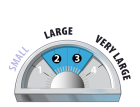
The deep persistent layer has still been sporadically reactive on hot days in high alpine terrain. Think twice about committing to the big faces unless you have a very good freeze.
Travel and Terrain Advice
- Travel early before the heat of the day melts surface crusts, and avoid big slopes in the afternoon.
Avalanche Summary
In general, avalanche hazard will be greatest during hot sunny days or warm rain. This has the potential to trigger smaller loose wet avalanches and larger wet slab avalanches on the basal weak layer. For current avalanche activity and observations, check out the Mountain Conditions Report
Snowpack Summary
The deep persistent weakness still exists and has been sporadically active on hot days in high alpine terrain. This will be the big thing to consider when deciding whether to get on the bigger snow and ice routes.
Weather Forecast
Some helpful weather links:
Remote weather stations in Banff, Yoho & Kootenay - Real time, raw, actual weather data.
Avalanche Canada Mountain Weather Forecast - Good for getting an overview of the major weather systems.
SpotWx - Good for a localized forecast
Environment Canada Yoho forecast - Simplified valley bottom forecast for Lake Louise area.
Avalanche Forecasts in your Inbox
Avalanche Canada has switched to an RSS feed for its daily forecasts. This is a much more flexible method that allows automatic delivery to your email inbox, or to an RSS reader of your choice.
What are RSS feeds?
RSS (Really Simple Syndication) is a popular standardized file format allowing up-to-date delivery of web-based content. RSS feeds enable you to receive content updates from websites, delivered to your email through an RSS aggregator (such as blogtrottr.com) or viewed through applications called RSS readers (such as feedly.com).
Set up an RSS feed for your email:
Select a RSS aggregator
- Avalanche Bulletin - Little Yoho URL:
http://www.avalanche.ca/api/forecasts/little-yoho.rss - Copy the url and paste it into the appropriate field of your RSS aggregator.
- Fill in your email address.
- Voila! Watch the Avalanche Canada forecast roll into your inbox.
Forecast Disclaimer
Avalanche Canada's Public Avalanche Bulletin, and other information and services provided by Avalanche Canada, are intended for personal and recreational purposes only.
**THIS INFORMATION IS PROVIDED "AS IS" AND IN NO EVENT SHALL THE PROVIDERS BE LIABLE FOR ANY DAMAGES, INCLUDING, WITHOUT LIMITATION, DAMAGES RESULTING FROM DISCOMFORT, INJURY, OR DEATH, CLAIMS BY THIRD PARTIES OR FOR OTHER SIMILAR COSTS, OR ANY SPECIAL, INCIDENTAL, OR CONSEQUENTIAL DAMAGES, ARISING OUT OF THE USE OF THE INFORMATION.**
The user acknowledges that it is impossible to accurately predict natural events such as avalanches in every instance, and uses the data in this bulletin with this always foremost in mind. The accuracy or reliability of the data is not guaranteed or warranted in any way and the Providers disclaim liability of any kind whatsoever, including, without limitation, liability for quality, performance, merchantability and fitness for a particular purpose arising out of the use, or inability to use the data.
For the most part, the snowpack has settled into a summer-like state, but loose wet avalanches are still possible on hot days in steep alpine terrain.