Avalanche Forecast
Kananaskis Country, Alberta Parks

More avalanche activity and forecasted snow mean the hazard will rise- possibly quickly and dramatically. Watch conditions carefully and don't venture into big terrain.
Avalanche Problem 1: Wind Slabs
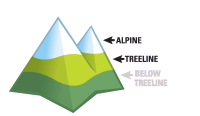
What Elevation?
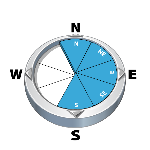
Which Slopes?
Chances of Avalanches?

Expected Size?

Travel and Terrain Advice
- Avoid freshly wind loaded features.
- Avoid steep lee and cross-loaded slopes
Avalanche Problem 2: Persistent Slabs
What Elevation?

Which Slopes?

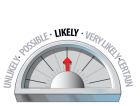
Chances of Avalanches?
Expected Size?

variable test results are keeping this layer on the radar. It is worth digging and testing as you approach treeline. Especially if we get more snow than expected.
Travel and Terrain Advice
- Carefully evaluate terrain features by digging and testing on adjacent, safe slopes.
- Avoid convex rolls at and below treeline where buried surface hoar may be preserved.
- Avoid exposure to overhead avalanche terrain, large avalanches may reach the end of run out zones.
Avalanche Summary
Several new slabs were seen in the northern reaches of our region today. It's hard to guess the age as they were blown in and reloaded quickly. They were all in the alpine and about sz2. While officially out of our forecast region, but still relevant, Cascade Falls in Banff was reported to have released today. Thinner areas appear to be touchier at the moment.
Snowpack Summary
Not a lot of snow last night. Some stations had a cm or 2, but nothing significant. What was interesting today was seeing, and feeling the wind arrive. Especially in the northern portion of the region. There are definitely new wind slabs in the alpine & treeline areas on N-S aspects. The first question to ask now is: How will the load shift and will this change initiate a natural cycle? We suspect it will in the alpine, but treeline will likely remain in the human triggering range only.
Weather Forecast
A bit of a conflicting forecast right now (we look at 3 everyday). Winds will be anywhere from 45-100km/hr. Given today's experience we'd lean more towards the 70km/hr range at 2500m. Flurries will only bring a few more centimeters tonight and another 6-20 tomorrow. Alpine temperatures will be around -10 for the high.
Avalanche Forecasts in your Inbox
Avalanche Canada has switched to an RSS feed for its daily forecasts. This is a much more flexible method that allows automatic delivery to your email inbox, or to an RSS reader of your choice.
What are RSS feeds?
RSS (Really Simple Syndication) is a popular standardized file format allowing up-to-date delivery of web-based content. RSS feeds enable you to receive content updates from websites, delivered to your email through an RSS aggregator (such as blogtrottr.com) or viewed through applications called RSS readers (such as feedly.com).
Set up an RSS feed for your email:
Select a RSS aggregator
- Kananaskis Country, Alberta Parks URL:
http://www.avalanche.ca/api/forecasts/kananaskis.rss - Copy the url and paste it into the appropriate field of your RSS aggregator.
- Fill in your email address.
- Voila! Watch the Avalanche Canada forecast roll into your inbox.
Forecast Disclaimer
Avalanche Canada's Public Avalanche Bulletin, and other information and services provided by Avalanche Canada, are intended for personal and recreational purposes only.
**THIS INFORMATION IS PROVIDED "AS IS" AND IN NO EVENT SHALL THE PROVIDERS BE LIABLE FOR ANY DAMAGES, INCLUDING, WITHOUT LIMITATION, DAMAGES RESULTING FROM DISCOMFORT, INJURY, OR DEATH, CLAIMS BY THIRD PARTIES OR FOR OTHER SIMILAR COSTS, OR ANY SPECIAL, INCIDENTAL, OR CONSEQUENTIAL DAMAGES, ARISING OUT OF THE USE OF THE INFORMATION.**
The user acknowledges that it is impossible to accurately predict natural events such as avalanches in every instance, and uses the data in this bulletin with this always foremost in mind. The accuracy or reliability of the data is not guaranteed or warranted in any way and the Providers disclaim liability of any kind whatsoever, including, without limitation, liability for quality, performance, merchantability and fitness for a particular purpose arising out of the use, or inability to use the data.
Wind slabs are extensive in the alpine down to tree line. There are failures within the slabs as well that are reactive.