Avalanche Forecast
Kananaskis Country, Alberta Parks

Early Seasons Avalanche Conditions exist. Lower elevations are clear of snow but higher elevations have enough snow to have avalanche problems. Ice climbers should pay close attention to overhead terrain at this time.
Avalanche Problem 1: Persistent Slabs
What Elevation?

Which Slopes?

Chances of Avalanches?

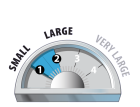
Expected Size?
Travel and Terrain Advice
- Carry avalanche safety equipment on ice climbs in avalanche terrain.
- Be careful with wind loaded pockets while approaching and climbing ice routes.
Avalanche Summary
Small thin slabs have been observed in steep alpine terrain along ridgelines. Some loose slides have also been observed as temperatures warmed up. Ice climbers should be thinking about avalanches right now despite many of the approaches being snow free. Overall observations are very limited at this time of year.
Snowpack Summary
First of all, observations are VERY limited.
Snow is beginning to accumulate in Alpine areas despite many lower elevations areas being snow free. Reports from last week in the Aster Lake area was up to 60cm of snow in Alpine terrain with pockets of snow along ridgelines and other areas up to 1m deep. Our weather stations are just coming online for the winter here and we are just updating and maintaining them so some of the readings regarding snow depths may be slightly off. As of 4pm on October 20th, the alpine looked to be a pretty snowy place.
Weather Forecast
New snow is slowly accumulating in Alpine areas. Keep an eye on freezing levels and input from new snow and winds and temp. Ice climbers who are travelling in gullied terrain accessing early season ice routes should be travelling with avalanche gear where appropriate and think about overhead terrain. Our observations are very limited at this time of year so this is more of a "heads up" to get people to start thinking about avalanche season.
Avalanche Forecasts in your Inbox
Avalanche Canada has switched to an RSS feed for its daily forecasts. This is a much more flexible method that allows automatic delivery to your email inbox, or to an RSS reader of your choice.
What are RSS feeds?
RSS (Really Simple Syndication) is a popular standardized file format allowing up-to-date delivery of web-based content. RSS feeds enable you to receive content updates from websites, delivered to your email through an RSS aggregator (such as blogtrottr.com) or viewed through applications called RSS readers (such as feedly.com).
Set up an RSS feed for your email:
Select a RSS aggregator
- Kananaskis Country, Alberta Parks URL:
http://www.avalanche.ca/api/forecasts/kananaskis.rss - Copy the url and paste it into the appropriate field of your RSS aggregator.
- Fill in your email address.
- Voila! Watch the Avalanche Canada forecast roll into your inbox.
Forecast Disclaimer
Avalanche Canada's Public Avalanche Bulletin, and other information and services provided by Avalanche Canada, are intended for personal and recreational purposes only.
**THIS INFORMATION IS PROVIDED "AS IS" AND IN NO EVENT SHALL THE PROVIDERS BE LIABLE FOR ANY DAMAGES, INCLUDING, WITHOUT LIMITATION, DAMAGES RESULTING FROM DISCOMFORT, INJURY, OR DEATH, CLAIMS BY THIRD PARTIES OR FOR OTHER SIMILAR COSTS, OR ANY SPECIAL, INCIDENTAL, OR CONSEQUENTIAL DAMAGES, ARISING OUT OF THE USE OF THE INFORMATION.**
The user acknowledges that it is impossible to accurately predict natural events such as avalanches in every instance, and uses the data in this bulletin with this always foremost in mind. The accuracy or reliability of the data is not guaranteed or warranted in any way and the Providers disclaim liability of any kind whatsoever, including, without limitation, liability for quality, performance, merchantability and fitness for a particular purpose arising out of the use, or inability to use the data.
Lots of uncertainty with the new snow and slabs. Main concern is along ridgelines and in lee features such as N and E aspects where loading has been most prevalent.