Avalanche Forecast
Avalanche Bulletin - Jasper National Park

Winter persists for the next 2 days. Avoid traveling or stopping under large slopes or corniced features as they may be sensitive to triggering.
Avalanche Problem 1: Wind Slabs
What Elevation?
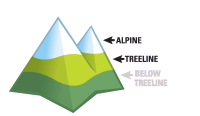
Which Slopes?
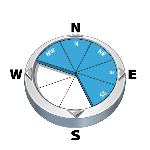
Chances of Avalanches?

Expected Size?
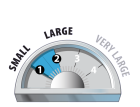
Travel and Terrain Advice
- If triggered the wind slabs may step down to deeper facet layers resulting in larger avalanches.
Avalanche Problem 2: Cornices
What Elevation?

Which Slopes?

Chances of Avalanches?
Expected Size?

Large cornices in all areas of the bulletin region. These failures are triggering persistent instabilities and the subsequent avalanches are proving large and destructive. Give these features a lot of room.
Travel and Terrain Advice
- Avoid travel on slopes that are exposed to cornices overhead.
- Minimize overhead exposure during periods of heavy loading from new snow, wind.
Avalanche Problem 3: Persistent Slabs
What Elevation?
Which Slopes?
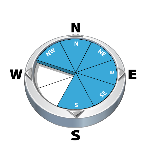
Chances of Avalanches?

Expected Size?

A slab up to 1m thick overlies: weak faceted crystals, and sun crusts (on steep S and W aspects). This problem has been associated with large triggers like cornices and the subsequent avalanches are proving large and destructive.
Travel and Terrain Advice
- Minimize exposure to overhead avalanche terrain, large avalanches may reach run out zones.
- Carefully evaluate big terrain features by digging and testing on adjacent, safe slopes.
Avalanche Summary
Poor visibility in the region today, reported audible (heard, not seen) avalanches in the Icefields.
A large (Size 2.5) persistent slab avalanche was reported Saturday, from a N asp in the alpine.
Great information being shared daily on Avalanche Canada's MIN Reports for the Maligne, Whistler's Creek and Icefields regions.
Snowpack Summary
A further 4cm, with previous HST totals up to 20cm with varied localized amounts as unsettled weather continues. Mod SW winds have certainly overloaded wind slabs and cornices in open areas at TL and ALP. Persistent instabilities (down 40 to 100 cm) are sensitive to large triggers like cornices, especially on N asp slopes at TL and ALP elevations.
Weather Forecast
Scattered flurries to continue for the next 48 hours. Accumulations and loading may vary significantly. Forecasted snow amounts for 25 cm for the Icefields and 20 for Maligne regions. At lower elevations (under 1800m) the snowpack is vanishing and what snow remains is not supportive with warming. Winds remain light with mod gusts at ridge top.
Avalanche Forecasts in your Inbox
Avalanche Canada has switched to an RSS feed for its daily forecasts. This is a much more flexible method that allows automatic delivery to your email inbox, or to an RSS reader of your choice.
What are RSS feeds?
RSS (Really Simple Syndication) is a popular standardized file format allowing up-to-date delivery of web-based content. RSS feeds enable you to receive content updates from websites, delivered to your email through an RSS aggregator (such as blogtrottr.com) or viewed through applications called RSS readers (such as feedly.com).
Set up an RSS feed for your email:
Select a RSS aggregator
- Avalanche Bulletin - Jasper National Park URL:
http://www.avalanche.ca/api/forecasts/jasper.rss - Copy the url and paste it into the appropriate field of your RSS aggregator.
- Fill in your email address.
- Voila! Watch the Avalanche Canada forecast roll into your inbox.
Forecast Disclaimer
Avalanche Canada's Public Avalanche Bulletin, and other information and services provided by Avalanche Canada, are intended for personal and recreational purposes only.
**THIS INFORMATION IS PROVIDED "AS IS" AND IN NO EVENT SHALL THE PROVIDERS BE LIABLE FOR ANY DAMAGES, INCLUDING, WITHOUT LIMITATION, DAMAGES RESULTING FROM DISCOMFORT, INJURY, OR DEATH, CLAIMS BY THIRD PARTIES OR FOR OTHER SIMILAR COSTS, OR ANY SPECIAL, INCIDENTAL, OR CONSEQUENTIAL DAMAGES, ARISING OUT OF THE USE OF THE INFORMATION.**
The user acknowledges that it is impossible to accurately predict natural events such as avalanches in every instance, and uses the data in this bulletin with this always foremost in mind. The accuracy or reliability of the data is not guaranteed or warranted in any way and the Providers disclaim liability of any kind whatsoever, including, without limitation, liability for quality, performance, merchantability and fitness for a particular purpose arising out of the use, or inability to use the data.
Overloaded and under tension, new and buried windslab in the Alpine and TL is sensitive to further loads, like more wind, more snow, more sun and, especially riders.