Avalanche Forecast
Avalanche Bulletin - Jasper National Park

A few cm of snow over the next few days will give the winds something to transport for the first time in a while. A conservative approach to terrain selection remains important with the existing weak snowpack structure.
Avalanche Problem 1: Persistent Slabs
What Elevation?
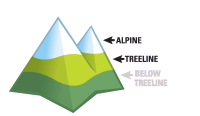
Which Slopes?

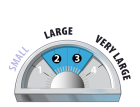
Chances of Avalanches?

Expected Size?
Travel and Terrain Advice
- Avoid shallow snowpack areas where triggering is more likely.
- Use conservative route selection, stick to supported terrain features, avoid overhead hazards.
Avalanche Problem 2: Wind Slabs
What Elevation?
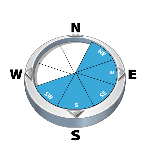
Which Slopes?
Chances of Avalanches?

Expected Size?
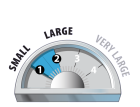
Expect hardslabs in the alpine and a few softer slabs at treeline. The cold has kept these in check and helped them settle over the last few days but some caution is still warranted especially as new snow and winds arrive over the next few days.
Travel and Terrain Advice
- The best powder will be found in sheltered locations at or below treeline.
- If triggered the wind slabs may step down to deeper layers resulting in large avalanches.
Avalanche Summary
Helicopter patrol down highway 93 Sunday night noticed only a few recent windslabs in the alpine. There has been limited activity over that last two weeks following the extensive avalanche cycle on February 8-9 yet it is still prudent to treat slopes that did not avalanche during this cycle with a great deal of respect.
Snowpack Summary
Old wind slabs and extensive wind effect found in open areas. The upper snowpack has settled to form a 50 to 80 cm slab that sits on three weak layers in the mid-pack which can be found throughout the forecast region, and produced many large avalanches during the Feb 8th cycle. The entire snowpack is faceting after two weeks of cold, dry weather.
Weather Forecast
NW flow to the upper atmosphere brings unsettled cool air to the region through Thursday.
Tues: Cloudy with flurries (up to 5cm of snowfall). Alpine Low -16 C, High -12 C. Ridge wind light West (gusting strong)
Wed: Cloudy with sunny periods and isolated flurries. Alp Low -15 C, High -12 C. Ridge wind light SW (gusting moderate)
Thurs: Up to 10cm snow
Avalanche Forecasts in your Inbox
Avalanche Canada has switched to an RSS feed for its daily forecasts. This is a much more flexible method that allows automatic delivery to your email inbox, or to an RSS reader of your choice.
What are RSS feeds?
RSS (Really Simple Syndication) is a popular standardized file format allowing up-to-date delivery of web-based content. RSS feeds enable you to receive content updates from websites, delivered to your email through an RSS aggregator (such as blogtrottr.com) or viewed through applications called RSS readers (such as feedly.com).
Set up an RSS feed for your email:
Select a RSS aggregator
- Avalanche Bulletin - Jasper National Park URL:
http://www.avalanche.ca/api/forecasts/jasper.rss - Copy the url and paste it into the appropriate field of your RSS aggregator.
- Fill in your email address.
- Voila! Watch the Avalanche Canada forecast roll into your inbox.
Forecast Disclaimer
Avalanche Canada's Public Avalanche Bulletin, and other information and services provided by Avalanche Canada, are intended for personal and recreational purposes only.
**THIS INFORMATION IS PROVIDED "AS IS" AND IN NO EVENT SHALL THE PROVIDERS BE LIABLE FOR ANY DAMAGES, INCLUDING, WITHOUT LIMITATION, DAMAGES RESULTING FROM DISCOMFORT, INJURY, OR DEATH, CLAIMS BY THIRD PARTIES OR FOR OTHER SIMILAR COSTS, OR ANY SPECIAL, INCIDENTAL, OR CONSEQUENTIAL DAMAGES, ARISING OUT OF THE USE OF THE INFORMATION.**
The user acknowledges that it is impossible to accurately predict natural events such as avalanches in every instance, and uses the data in this bulletin with this always foremost in mind. The accuracy or reliability of the data is not guaranteed or warranted in any way and the Providers disclaim liability of any kind whatsoever, including, without limitation, liability for quality, performance, merchantability and fitness for a particular purpose arising out of the use, or inability to use the data.
A 50 to 80cm thick slab, sits over sun Crusts (south and west aspects), Surface Hoar (at, and just above treeline) and weak Faceted Crystals (very developed in shallow snowpack features). Faceting has reduced slab strength in shallow and BTL areas.