Avalanche Forecast
Avalanche Bulletin - Jasper National Park

The persistent slab problem continues to make it difficult to travel unabashedly through avalanche terrain with any degree of confidence, especially at, and just above treeline.
Avalanche Problem 1: Persistent Slabs
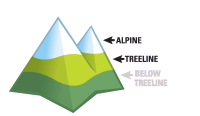
What Elevation?

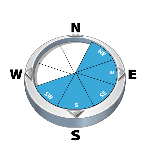
Which Slopes?

Chances of Avalanches?

Expected Size?

Travel and Terrain Advice
- Use conservative route selection, stick to supported terrain features, avoid overhead hazards.
- Watch for whumpfing, hollow sounds, and shooting cracks.
Avalanche Problem 2: Wind Slabs
What Elevation?
Which Slopes?
Chances of Avalanches?
Expected Size?

While the winds are now starting to back off, they blew hard, and from a variety of directions all week. Fresh windslabs that are hard in the alpine and exist well into treeline areas can be expected to be be sensitive to skier triggering.
Travel and Terrain Advice
- If triggered the wind slabs may step down to deeper layers resulting in large avalanches.
- The best powder will be found in sheltered locations at or below treeline.
Avalanche Summary
No new avalanche activity observed or reported in the last week however an extensive cycle resulted when the persistent slab became overloaded with successive storms totalling 50cm each on January 30th and February 8th. Avalanches to size 3.5 were observed from most aspects and at most elevations with the majority of the action seen around 21-2500m
Snowpack Summary
15cm snow over the last week, and available snow from the previous storms, has been redistributed by strong winds from variable directions to build slabs and wind effect in open areas. A persistent slab sitting on three weak layers down 50 to 80cm can be found throughout the forecast region and has produced many large avalanches traveling full path
Weather Forecast
Light north winds will continue as will the cold temperatures with alpine lows near -25C and daily highs near -18C. While no snow is expected for most of the week, a fair amount of cloud can be expected for the period. First moderate UV values of the season, bring your sunscreen.
Avalanche Forecasts in your Inbox
Avalanche Canada has switched to an RSS feed for its daily forecasts. This is a much more flexible method that allows automatic delivery to your email inbox, or to an RSS reader of your choice.
What are RSS feeds?
RSS (Really Simple Syndication) is a popular standardized file format allowing up-to-date delivery of web-based content. RSS feeds enable you to receive content updates from websites, delivered to your email through an RSS aggregator (such as blogtrottr.com) or viewed through applications called RSS readers (such as feedly.com).
Set up an RSS feed for your email:
Select a RSS aggregator
- Avalanche Bulletin - Jasper National Park URL:
http://www.avalanche.ca/api/forecasts/jasper.rss - Copy the url and paste it into the appropriate field of your RSS aggregator.
- Fill in your email address.
- Voila! Watch the Avalanche Canada forecast roll into your inbox.
Forecast Disclaimer
Avalanche Canada's Public Avalanche Bulletin, and other information and services provided by Avalanche Canada, are intended for personal and recreational purposes only.
**THIS INFORMATION IS PROVIDED "AS IS" AND IN NO EVENT SHALL THE PROVIDERS BE LIABLE FOR ANY DAMAGES, INCLUDING, WITHOUT LIMITATION, DAMAGES RESULTING FROM DISCOMFORT, INJURY, OR DEATH, CLAIMS BY THIRD PARTIES OR FOR OTHER SIMILAR COSTS, OR ANY SPECIAL, INCIDENTAL, OR CONSEQUENTIAL DAMAGES, ARISING OUT OF THE USE OF THE INFORMATION.**
The user acknowledges that it is impossible to accurately predict natural events such as avalanches in every instance, and uses the data in this bulletin with this always foremost in mind. The accuracy or reliability of the data is not guaranteed or warranted in any way and the Providers disclaim liability of any kind whatsoever, including, without limitation, liability for quality, performance, merchantability and fitness for a particular purpose arising out of the use, or inability to use the data.
A stiff slab 50 to 90cm thick, sits over sun crusts on south and west aspects, Surface Hoar preserved at, and just above treeline and weak faceted crystals lurking in shallow snowpack features. This is a dangerous problem that is difficult to avoid.