Avalanche Forecast
Avalanche Bulletin - Glacier National Park

Avoid steep solar aspects if the sun is shinning as this will increase the avalanche danger. Have a dig into the upper snowpack and look for weak layers before committing to the line.
Avalanche Problem 1: Storm Slabs
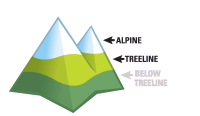
What Elevation?
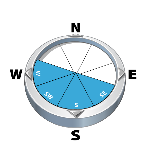
Which Slopes?

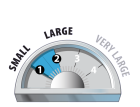
Chances of Avalanches?

Expected Size?
Travel and Terrain Advice
- Use caution in steeper terrain. Avoid unsupported features on the landscape.
- Be careful with wind loaded pockets, especially near ridge crests and roll-overs.
Avalanche Problem 2: Persistent Slabs
What Elevation?
Which Slopes?
Chances of Avalanches?
Expected Size?

Several sun crusts are buried within the top 50 cms on steep solar aspects. These layers have the potential for human triggering, dig down and assess the snowpack before committing to the line.
Travel and Terrain Advice
- Carefully evaluate terrain features by digging and testing on adjacent, safe slopes.
- Minimize exposure to steep, sun exposed slopes when the solar radiation is strong.
Avalanche Summary
A small cycle occurred yesterday on steep solar aspects when the sun was shinning, expect this to be an increasing trend with sun in the forecast.
Earlier this week a large cornice failure released a size 3.5 avalanche running to valley bottom. This cornice triggered slide was an anomaly, but a good reminder to stay vigilant in large terrain.
Snowpack Summary
Expect to find several crust layers on steep solar aspects in the top 50cm of snow. ~30cm of recent snow overlies previous wind slab in the alpine. The late Feb facet layer is down ~50cm and the mid Jan persistent weak layer is down ~1-2m. A well settled base contains early season crusts, which are starting to break down in some areas.
Weather Forecast
Mainly cloudy with isolated flurries for the day with a temperature range of 0 to -9, 10-25km/h southerly winds and a freezing level rising to 1450m. 10-15cm of forecasted snow tonight and into Friday. There will be a clearing trend arriving over weekend and will continue into next week. Clear skies, light winds and no snow is our near future.
Avalanche Forecasts in your Inbox
Avalanche Canada has switched to an RSS feed for its daily forecasts. This is a much more flexible method that allows automatic delivery to your email inbox, or to an RSS reader of your choice.
What are RSS feeds?
RSS (Really Simple Syndication) is a popular standardized file format allowing up-to-date delivery of web-based content. RSS feeds enable you to receive content updates from websites, delivered to your email through an RSS aggregator (such as blogtrottr.com) or viewed through applications called RSS readers (such as feedly.com).
Set up an RSS feed for your email:
Select a RSS aggregator
- Avalanche Bulletin - Glacier National Park URL:
http://www.avalanche.ca/api/forecasts/glacier.rss - Copy the url and paste it into the appropriate field of your RSS aggregator.
- Fill in your email address.
- Voila! Watch the Avalanche Canada forecast roll into your inbox.
Forecast Disclaimer
Avalanche Canada's Public Avalanche Bulletin, and other information and services provided by Avalanche Canada, are intended for personal and recreational purposes only.
**THIS INFORMATION IS PROVIDED "AS IS" AND IN NO EVENT SHALL THE PROVIDERS BE LIABLE FOR ANY DAMAGES, INCLUDING, WITHOUT LIMITATION, DAMAGES RESULTING FROM DISCOMFORT, INJURY, OR DEATH, CLAIMS BY THIRD PARTIES OR FOR OTHER SIMILAR COSTS, OR ANY SPECIAL, INCIDENTAL, OR CONSEQUENTIAL DAMAGES, ARISING OUT OF THE USE OF THE INFORMATION.**
The user acknowledges that it is impossible to accurately predict natural events such as avalanches in every instance, and uses the data in this bulletin with this always foremost in mind. The accuracy or reliability of the data is not guaranteed or warranted in any way and the Providers disclaim liability of any kind whatsoever, including, without limitation, liability for quality, performance, merchantability and fitness for a particular purpose arising out of the use, or inability to use the data.
Isolated storm slabs could be found at ridgetop or features exposed to the wind. Solar radiation will trigger loose dry avalanches on steep sunny slopes and cliffs. These "sluffs" could trigger a soft slab or step down to a persistent weak layer.