Avalanche Forecast
Avalanche Bulletin - Glacier National Park

Avoid avalanche terrain.
A natural cycle is producing results up to size 3.5 and running into valley bottoms.
Avalanche Problem 1: Storm Slabs
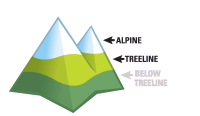
What Elevation?
Which Slopes?

Chances of Avalanches?

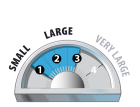
Expected Size?
Travel and Terrain Advice
- Avoid exposure to overhead avalanche terrain, large avalanches may reach the end of run out zones.
- Use conservative route selection, choose moderate angled and supported terrain with low consequence.
Avalanche Problem 2: Persistent Slabs
What Elevation?

Which Slopes?
Chances of Avalanches?

Expected Size?
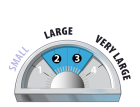
The Jan 16th, 4th and Dec 15th surface hoar layers have been quiet recently but may reawaken given a large trigger such as a storm slab avalanche or cornice fall.
Travel and Terrain Advice
- Pay attention to overhead hazards like cornices which could easily trigger the deep persistent slab.
- Avoid exposure to overhead avalanche terrain, large avalanches may reach the end of run out zones.
Avalanche Problem 3: Loose Dry
What Elevation?
Which Slopes?
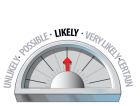
Chances of Avalanches?
Expected Size?
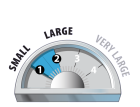
Rapid snowfall, with 40cm of low density overnight will be easy to get moving in steep terrain. Both natural and skier triggered sluffing can be expected today.
Travel and Terrain Advice
- Be aware of party members below you that may be exposed to your sluffs.
- Use caution above cliffs where small avalanches may have severe consequences.
Avalanche Summary
Numerous size 2 - 2.5 natural avalanches seen along the highway corridor yesterday.
Sluff was moving fast and traveling far in steep trees yesterday but had no slab properties.
Artillery avalanche control is producing numerous large avalanches up to size 3.5 (possibly 4.0) which have buried the highway in several locations.
Snowpack Summary
40cm of low density snow overnight adds to the weekly total of 155cm, with a two week total of 270cm. The mid Dec and Jan persistent weak layers are now buried 150-200cm in the snowpack with a height of snow of 350cm at 1900m. Expect to find reactive storm slab and pockets of wind slab above tree line into the alpine.
Weather Forecast
Though I won't be skiing today I still managed to get face shots while driving to work with 40cm on the closed highway.
Light snow for today, 15km/hr gusting to 70km/hr winds from the east and temps to remain around -3. Tomorrow will mark the start of a prolonged high pressure system, temps and wind will drop and the skies will clear.
Avalanche Forecasts in your Inbox
Avalanche Canada has switched to an RSS feed for its daily forecasts. This is a much more flexible method that allows automatic delivery to your email inbox, or to an RSS reader of your choice.
What are RSS feeds?
RSS (Really Simple Syndication) is a popular standardized file format allowing up-to-date delivery of web-based content. RSS feeds enable you to receive content updates from websites, delivered to your email through an RSS aggregator (such as blogtrottr.com) or viewed through applications called RSS readers (such as feedly.com).
Set up an RSS feed for your email:
Select a RSS aggregator
- Avalanche Bulletin - Glacier National Park URL:
http://www.avalanche.ca/api/forecasts/glacier.rss - Copy the url and paste it into the appropriate field of your RSS aggregator.
- Fill in your email address.
- Voila! Watch the Avalanche Canada forecast roll into your inbox.
Forecast Disclaimer
Avalanche Canada's Public Avalanche Bulletin, and other information and services provided by Avalanche Canada, are intended for personal and recreational purposes only.
**THIS INFORMATION IS PROVIDED "AS IS" AND IN NO EVENT SHALL THE PROVIDERS BE LIABLE FOR ANY DAMAGES, INCLUDING, WITHOUT LIMITATION, DAMAGES RESULTING FROM DISCOMFORT, INJURY, OR DEATH, CLAIMS BY THIRD PARTIES OR FOR OTHER SIMILAR COSTS, OR ANY SPECIAL, INCIDENTAL, OR CONSEQUENTIAL DAMAGES, ARISING OUT OF THE USE OF THE INFORMATION.**
The user acknowledges that it is impossible to accurately predict natural events such as avalanches in every instance, and uses the data in this bulletin with this always foremost in mind. The accuracy or reliability of the data is not guaranteed or warranted in any way and the Providers disclaim liability of any kind whatsoever, including, without limitation, liability for quality, performance, merchantability and fitness for a particular purpose arising out of the use, or inability to use the data.
Another 40cm overnight adds to our storm slab which has reached its critical load. The storm slab will need some time to adjust, settle out and stabilize.