Avalanche Forecast
Avalanche Bulletin - Glacier National Park

Continued loading of the storm slab along with warming temperatures will lead to an increasing avalanche danger through the day.
Avalanche Problem 1: Storm Slabs
What Elevation?

Which Slopes?

Chances of Avalanches?

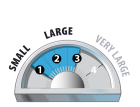
Expected Size?
Travel and Terrain Advice
- Watch for whumpfing, hollow sounds, and shooting cracks.
- Use conservative route selection, choose moderate angled and supported terrain with low consequence.
Avalanche Problem 2: Persistent Slabs
What Elevation?

Which Slopes?
Chances of Avalanches?

Expected Size?
We are now in a lower likelihood/very high consequence scenario with the January 4th and the Dec 15th surface hoar layers. These layers should not be overlooked and could be sensitive to human triggering in thin areas.
Travel and Terrain Advice
- Avoid steep convexities or areas with a thin or variable snowpack.
- Pay attention to overhead hazards like cornices which could trigger the deep persistent slab.
Avalanche Summary
Highway avalanche patrol observed several Natural avalanches to size 2.5 from various aspects. One of note was a natural size 3 from Jan 21st in Crossover path possibly cornice triggered. Our field team observed a size 2 slide on E aspect, 1800m on steep skiable terrain that looked to be tree bomb triggered.
Snowpack Summary
Glacier Park has received over 140cm of snow in the last 2 weeks accompanied by significant wind; expect to find windslab in the alpine and exposed treeline. Warming trend with more snowfall will assist storm slab formation over the Jan 16 surface hoar. The Dec 15 layer is now buried over 1m, Jan 4th is down ~65cm and the Jan 16th is down ~50cm.
Weather Forecast
A pulse of Pacific moisture will bring rising temperatures, moderate S winds and upwards of 15cm of storm snow. Freezing level should reach 1600m today. Thursday, Friday we should expect cloudy with sunny periods a trace of snow and winds SW creeping into the moderate range at ridge top.
Avalanche Forecasts in your Inbox
Avalanche Canada has switched to an RSS feed for its daily forecasts. This is a much more flexible method that allows automatic delivery to your email inbox, or to an RSS reader of your choice.
What are RSS feeds?
RSS (Really Simple Syndication) is a popular standardized file format allowing up-to-date delivery of web-based content. RSS feeds enable you to receive content updates from websites, delivered to your email through an RSS aggregator (such as blogtrottr.com) or viewed through applications called RSS readers (such as feedly.com).
Set up an RSS feed for your email:
Select a RSS aggregator
- Avalanche Bulletin - Glacier National Park URL:
http://www.avalanche.ca/api/forecasts/glacier.rss - Copy the url and paste it into the appropriate field of your RSS aggregator.
- Fill in your email address.
- Voila! Watch the Avalanche Canada forecast roll into your inbox.
Forecast Disclaimer
Avalanche Canada's Public Avalanche Bulletin, and other information and services provided by Avalanche Canada, are intended for personal and recreational purposes only.
**THIS INFORMATION IS PROVIDED "AS IS" AND IN NO EVENT SHALL THE PROVIDERS BE LIABLE FOR ANY DAMAGES, INCLUDING, WITHOUT LIMITATION, DAMAGES RESULTING FROM DISCOMFORT, INJURY, OR DEATH, CLAIMS BY THIRD PARTIES OR FOR OTHER SIMILAR COSTS, OR ANY SPECIAL, INCIDENTAL, OR CONSEQUENTIAL DAMAGES, ARISING OUT OF THE USE OF THE INFORMATION.**
The user acknowledges that it is impossible to accurately predict natural events such as avalanches in every instance, and uses the data in this bulletin with this always foremost in mind. The accuracy or reliability of the data is not guaranteed or warranted in any way and the Providers disclaim liability of any kind whatsoever, including, without limitation, liability for quality, performance, merchantability and fitness for a particular purpose arising out of the use, or inability to use the data.
Storm slabs sit on a layer of surface hoar and/or a thin crust. They will be most sensitive in areas exposed to wind and unsupported convexities, where there's tension in the snowpack. Storm slabs triggered could step down to deeper weak layers.