Avalanche Forecast
Cariboos

Tricky conditions with a slowly increasing load over multiple weak layers in the snowpack. Take a conservative approach to your terrain choices.
Avalanche Problem 1: Storm Slabs
What Elevation?

Which Slopes?

Chances of Avalanches?

Expected Size?
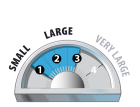
Travel and Terrain Advice
- Use caution in lee areas. Recent wind loading have created wind slabs.
- Use conservative route selection. Choose moderate angled and supported terrain with low consequence.
- Choose regroup spots that are out of avalanche terrain.
Avalanche Problem 2: Persistent Slabs
What Elevation?
Which Slopes?
Chances of Avalanches?

Expected Size?
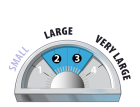
Several weak layers are buried in the snowpack, creating very large avalanches when triggered.
Travel and Terrain Advice
- Avoid steep convexities or areas with a thin or variable snowpack.
- Make conservative terrain choices, remembering that avalanches may be surprisingly large.
Avalanche Summary
Avalanche activity slowed on Thursday and Friday, but a few size 2.5-3 naturally and explosive-triggered slabs have been reported. These were around 120 cm deep and are suspected to have failed on the early January persistent weak layer.
On Monday, there was evidence of a widespread natural avalanche cycle with very large avalanches being released (up to size 3.5). This occurred on all aspects, at all elevations, with depths of 40 to 100 cm, and generally occurring on the mid-January weak layer but sometimes on the mid-December layer. Also, a large (size 2.5) persistent slab avalanche was triggered by a skier at treeline, which stepped down to the mid-December weak layer. The slab was 65 cm deep and slid on a 30 to 35 degree north-facing slope.
Although natural avalanche activity has diminished, there's still a good chance of triggering a surprisingly large avalanche with the weight of a person.
Snowpack Summary
The current snowpack is complex, with three active weak layers that professionals are monitoring. Recent storm snow has been shifted by winds to form wind slabs and cornices.
Down about 30-70 cm is a crust and/or surface hoar layer buried mid-January. The crust is reportedly widespread, with the possible exception of high elevation north aspects. The surface hoar is up to 10 mm is size and has been reported at all elevation bands.
Deeper in the snowpack, the early-January persistent weak layer is found 40 to 120 cm below the surface. It is composed of surface hoar on sheltered slopes and sun crust on steep solar aspects and found at all elevation bands. Snowpack tests show sudden fracture characters with easy to moderate loads and high propagation potential, as well as whumpfs and cracking with skier traffic. Another weak layer buried mid-December consisting of a facet/surface hoar/crust combination is buried 40 to 100 cm deep. It is most problematic at and below tree line.
A rain crust buried in November is 100 to 150 cm deep and is likely dormant for the time being.
Weather Forecast
Saturday: Light snow. Light to moderate south-easterly winds. Alpine temperature near -10.
Sunday: 5-10 cm snow. Moderate south-westerly winds. Alpine temperature near -7.
Monday: 5-10 cm snow. Moderate south-westerly winds. Alpine temperature near -4.
More information can be found in the Mountain Weather Forecast.
Avalanche Forecasts in your Inbox
Avalanche Canada has switched to an RSS feed for its daily forecasts. This is a much more flexible method that allows automatic delivery to your email inbox, or to an RSS reader of your choice.
What are RSS feeds?
RSS (Really Simple Syndication) is a popular standardized file format allowing up-to-date delivery of web-based content. RSS feeds enable you to receive content updates from websites, delivered to your email through an RSS aggregator (such as blogtrottr.com) or viewed through applications called RSS readers (such as feedly.com).
Set up an RSS feed for your email:
Select a RSS aggregator
- Cariboos URL:
http://www.avalanche.ca/api/forecasts/cariboos.rss - Copy the url and paste it into the appropriate field of your RSS aggregator.
- Fill in your email address.
- Voila! Watch the Avalanche Canada forecast roll into your inbox.
Forecast Disclaimer
Avalanche Canada's Public Avalanche Bulletin, and other information and services provided by Avalanche Canada, are intended for personal and recreational purposes only.
**THIS INFORMATION IS PROVIDED "AS IS" AND IN NO EVENT SHALL THE PROVIDERS BE LIABLE FOR ANY DAMAGES, INCLUDING, WITHOUT LIMITATION, DAMAGES RESULTING FROM DISCOMFORT, INJURY, OR DEATH, CLAIMS BY THIRD PARTIES OR FOR OTHER SIMILAR COSTS, OR ANY SPECIAL, INCIDENTAL, OR CONSEQUENTIAL DAMAGES, ARISING OUT OF THE USE OF THE INFORMATION.**
The user acknowledges that it is impossible to accurately predict natural events such as avalanches in every instance, and uses the data in this bulletin with this always foremost in mind. The accuracy or reliability of the data is not guaranteed or warranted in any way and the Providers disclaim liability of any kind whatsoever, including, without limitation, liability for quality, performance, merchantability and fitness for a particular purpose arising out of the use, or inability to use the data.
Recent snow and wind have built slabs that can be triggered by the weight of a person. A storm slab could step down to a deeper weak layer, creating a surprisingly large avalanche.